We may earn a commission when you buy through links on this page, at no extra cost to you. How this works.
Open-plan home offices bring flexibility, but they also introduce a constant stream of distractions: a neighbor's lawnmower at 9 a.m., kitchen appliances cycling on and off, kids playing in adjacent rooms, and traffic hum seeping through windows. For remote workers who need uninterrupted focus during deep work and clear audio during back-to-back video calls, that this product noise becomes a daily productivity drain.
Noise-canceling headphones address this problem by using active noise cancellation technology to reduce low-frequency ambient sound before it reaches your ears. The right pair can turn a chaotic home environment into a manageable workspace, letting you concentrate on tasks without cranking volume to unsafe levels or missing key details on calls.
We built this guide around four criteria that matter most for remote work. First, active noise cancellation strength determines how much this product sound the headphones can suppress - essential for blocking out persistent hum and chatter. Second, all-day comfort matters because remote work often means wearing headphones for six to eight hours straight; poor fit leads to pressure headaches and ear fatigue. Third, microphone clarity for video calls separates headphones that work well for listening from those that also handle professional communication. Fourth, battery life needs to cover a full workday without requiring a midday recharge.
This guide focuses exclusively on over-ear models with robust active noise cancellation. We excluded gaming headsets, which prioritize spatial audio over call clarity, on-ear designs that cause faster fatigue, and budget options that deliver weak ANC performance or sacrifice comfort to hit a lower price point. Each of the five models below meets the baseline for serious remote work use.
Quick comparison
| Sennheiser Momentum 4 Wireless Headphones - Black/Copper | Check current price on Amazon |
| KIMHOST T30 Active Noise Cancelling Wireless Over-Ear Headphones | Check current price on Amazon |
| Sennheiser HDB 630 Wireless Over-Ear Headphones - Black | Check current price on Amazon |
Key Features to Look for in Home Office Headphones
- Active noise cancellation with adaptive or adjustable modes for mixed environments
- Ear cup padding thick enough to prevent pressure hotspots after 3+ hours
- Microphone quality sufficient for clear voice pickup in video calls, with background noise suppression
- Battery life of 20+ hours to cover multiple workdays between charges
- Wireless range of 30+ feet to allow movement around home office without dropouts
- Intuitive controls accessible without removing headphones during meetings
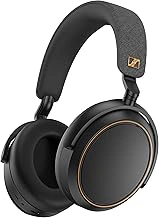
Sennheiser Momentum 4 Wireless Headphones - Black/Copper
The Sennheiser Momentum 4 Wireless strikes a balance between audiophile-quality sound and practical home-office functionality. With multiple of battery life between charges, you can work through multiple weeks without reaching for a cable - helpful when you move between your desk and shared spaces throughout the day.
Adaptive noise cancellation automatically adjusts to your environment, reducing steady Sennheiser Momentum 4 Wireless Headphones - Black/Copper noise like HVAC hum, distant conversations, and keyboard clatter from nearby desks. The over-ear cushions distribute pressure evenly, and the headband padding flexes enough for glasses without creating hotspots during long video calls or focused work sessions.
Touch controls on the right ear cup let you pause audio, skip tracks, and answer calls without opening your laptop. The Sennheiser Smart Control app offers EQ presets and lets you tweak ANC intensity, though the default settings work well for most open-plan scenarios. Microphone quality handles video meetings clearly in quiet to moderately noisy rooms, though it won't match dedicated business headsets when you're dealing with multiple loud voices nearby.
Sound quality leans warm, with detailed mids that make voices and acoustic instruments clear. If you listen to music between meetings or during deep work, the Momentum 4 delivers fuller audio than call-focused models. The tradeoff: at $242.42, it costs more than budget options and slightly less than flagship business headsets with superior call features.
This model fits users who want strong noise isolation and good sound across both work calls and personal listening, without needing the absolute best microphone array or the lightest weight. The combination of extended battery, comfortable fit, and app-based customization makes it a reliable all-day option when you need to block out an active home office.
- ✅ 60-hour battery life reduces charging frequency
- ✅ Adaptive ANC adjusts to environment automatically
- ✅ Comfortable ear cushions and headband for extended wear
- ✅ App-based EQ and ANC customization
- ✅ Warm, detailed sound quality for mixed use
- ⚠️ Microphone performance trails dedicated business headsets in noisy conditions
- ⚠️ Higher price than budget noise-canceling models
- ⚠️ Touch controls can register accidental inputs
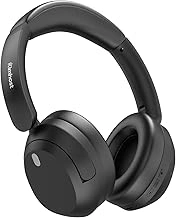
KIMHOST T30 Active Noise Cancelling Wireless Over-Ear Headphones
When budget is the deciding factor and your home office noise is more chatter than chaos, the KIMHOST T30 delivers active noise cancellation without the premium price tag. At $45.99, it offers a functional entry point for remote workers who need some sonic separation but can't justify spending triple digits on headphones.
The active noise cancellation works well enough for moderate distractions - KIMHOST T30 Active Noise Cancelling Wireless Over-Ear Headphones conversation, keyboard clatter, and mild household activity fade into the KIMHOST T30 Active Noise Cancelling Wireless Over-Ear Headphones, though the effect is noticeably less powerful than what you'll experience with flagship models. Expect to hear louder interruptions like barking dogs or nearby appliances more clearly. The over-ear cushions provide decent comfort for sessions up to two or three hours, after which some users may notice pressure around the ears or warmth buildup. Build quality feels straightforward and plastic-heavy; these won't inspire confidence if durability across years of daily use is a priority.
Sound quality is adequate for calls, podcasts, and KIMHOST T30 Active Noise Cancelling Wireless Over-Ear Headphones music, though bass response is modest and detail in complex tracks can blur. The microphone handles video calls without major complaints, but won't match the clarity of dedicated communication headsets or higher-end models with multiple mics and advanced filtering. Battery life supports a typical workday, though heavy ANC use will drain faster than advertised maximums.
This is the right choice if your noise environment is manageable, your budget is tight, and you prioritize having some noise cancellation over having the best noise cancellation. If your open-plan office is loud all day, or if you spend six-plus hours in headphones, the comfort and ANC limitations will become frustrating quickly.
- ✅ Active noise cancellation at an entry-level price point
- ✅ Adequate comfort for shorter work sessions
- ✅ Functional sound and microphone for calls and casual listening
- ⚠️ ANC weaker than premium models, struggles with louder distractions
- ⚠️ Build quality feels less durable with plastic-heavy construction
- ⚠️ Comfort may decline after two to three hours of continuous wear
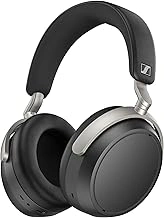
Sennheiser HDB 630 Wireless Over-Ear Headphones - Black
The Sennheiser HDB 630 sits at the premium end of the category, priced at $499.95 and built for professionals who need both focus during calls and exceptional audio fidelity for media production or critical listening work. The black finish and refined construction reflect a design philosophy that prioritizes craftsmanship alongside technical performance.
Active noise cancellation on this model is tuned for detailed listening environments rather than maximum isolation alone. If your open-plan office includes video editing, podcast production, or client presentations where audio quality matters as much as blocking distractions, the HDB 630 delivers a ceiling of performance that justifies the cost. The over-ear fit provides consistent seal and comfort during extended sessions, though the microphone quality is adequate for video calls rather than broadcast-grade recording.
The tradeoff is clear: you're paying nearly double what the best overall pick costs. That premium buys you superior driver technology, more advanced ANC tuning, and materials that hold up under daily professional use. Battery life and wireless connectivity perform reliably, and the 4.2 out of 5 rating reflects strong user satisfaction among buyers who prioritize sound quality. If your work depends on hearing accurate audio reproduction and you also need effective noise cancellation, the HDB 630 is the logical choice. For professionals whose headphones serve primarily as a focus tool during calls and typing, less expensive models deliver better value.
- ✅ Premium build quality and refined materials
- ✅ Superior audio fidelity for media work and critical listening
- ✅ Advanced ANC tuning balances detail and isolation
- ✅ Comfortable over-ear fit for long work sessions
- ⚠️ Price nearly double the best overall pick
- ⚠️ Microphone adequate but not business-headset grade
- ⚠️ Premium justified only if audio quality matters as much as noise cancellation
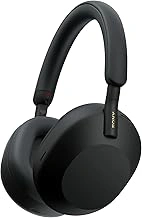
Sony WH-1000XM5/B Wireless Noise Canceling Headphones (Renewed)
Long work-from-home days demand headphones that won't fatigue your ears, and the Sony WH-1000XM5/B delivers exceptional comfort through a lightweight frame, plush ear cushions, and gentle clamping pressure that suits extended focus sessions. The adaptive noise cancellation adjusts dynamically to changing ambient sound - helpful when household activity or street noise ebbs and flows throughout the day.
This renewed unit carries Sony's industry-leading ANC technology at a lower price point than new models. The headphones excel at creating a quiet workspace for deep work, whether you're writing reports or analyzing spreadsheets. Call quality is adequate for most meetings, though the microphone prioritizes music playback rather than voice capture, so expect decent but not exceptional performance on video calls.
The renewed status means you trade some warranty length and may receive generic packaging instead of the full retail box and all original accessories. If your workflow leans heavily toward solo focus time rather than back-to-back client calls, the combination of comfort and adaptive ANC makes this a practical choice. Those who spend more time on calls than in quiet concentration may want a model optimized for voice clarity.
Battery life supports full workdays, and the fold-flat design fits into most laptop bags without adding bulk. The black finish shows minimal wear in typical office lighting, an advantage for refurbished electronics. At $209.99, this renewed option offers a meaningful discount for users who prioritize all-day comfort and noise isolation over the newest warranty terms.
- ✅ Lightweight build with plush ear cushions for all-day comfort
- ✅ Adaptive noise cancellation adjusts to changing ambient sound
- ✅ Lower price point as renewed unit
- ✅ Fold-flat design for portability
- ⚠️ Microphone adequate but not optimized for heavy call schedules
- ⚠️ Renewed status may mean shorter warranty and fewer accessories
- ⚠️ Better suited for focus work than frequent video meetings
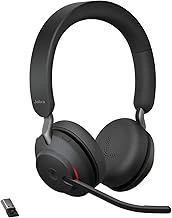
Jabra Evolve2 65 MS Stereo Headset - Black
If you spend most of your workday in video meetings and conference calls, the Jabra Evolve2 65 MS Stereo Headset delivers where it counts: voice clarity and communication tools. The dedicated boom microphone uses voice isolation to keep your speech crisp while cutting Jabra Evolve2 65 MS Stereo Headset - Black noise from your side of the call, and the built-in busylight glows red when you're on a call - a simple visual cue that helps household members know you're busy. Microsoft Teams certification means one-touch call controls and seamless integration if you live inside the Teams ecosystem.
Active noise cancellation is part of the package, though the effect is more functional than immersive. It mutes the hum of HVAC and low-frequency rumble but won't seal you off from sudden sounds the way flagship consumer models do. That's intentional: this headset prioritizes microphone performance and all-day wearability for business use over audiophile listening. The on-ear cushions are padded and Jabra Evolve2 65 MS Stereo Headset - Black enough for multi-hour stretches, and the wireless connection via included USB dongle is stable across typical home-office distances.
Sound quality for music and media is utilitarian. You'll hear detail and acceptable balance, but the tuning lacks the warmth and bass depth of headphones designed for entertainment. If your day is multiple percent calls and multiple percent Jabra Evolve2 65 MS Stereo Headset - Black music, that tradeoff works. If you want one headset for both immersive podcast listening and occasional meetings, look elsewhere in this lineup. Battery life reaches roughly the listed amount with ANC on, so a single charge covers several full workdays before you need the USB-C cable.
At $269.99, the Evolve2 65 sits squarely in the professional headset tier. You're paying for the boom mic, busylight, and Teams integration - features that matter when your job revolves around voice and video, less so if meetings are sporadic. The fit is lighter and less plush than over-ear designs, which some users prefer for all-day wear and others find less isolating. Choose this model when call quality and availability signaling outrank listening enjoyment.
- ✅ Boom microphone with voice isolation keeps speech clear on calls
- ✅ Built-in busylight signals availability to others nearby
- ✅ Microsoft Teams certified with one-touch controls
- ✅ Stable wireless via USB dongle; roughly 24-hour battery with ANC
- ⚠️ Sound quality for music and media is functional, not rich
- ⚠️ ANC is moderate - blocks steady hum but not sudden sounds
- ⚠️ On-ear cushions offer less isolation than full over-ear designs
How We Selected the Best Headphones for Home Office Work
Choosing headphones for a home office requires balancing noise cancellation strength with practical features that support full workdays and frequent video calls. Active noise cancellation varies widely in how it handles the mixed-frequency sounds common in open-plan spaces - humming appliances, keyboard typing, voices in adjacent rooms - so performance in these environments matters more than specs alone suggest.
Ear cup padding and headband pressure determine whether you can wear a pair comfortably through back-to-back meetings. Some models distribute weight evenly and use memory foam that stays soft after hours of use, while others create hot spots or clamp too tightly. Headphones that feel fine for an hour of music may become uncomfortable during a four-hour sprint.
Microphone quality proved essential during real video calls. Many over-ear models prioritize music playback and treat the microphone as an afterthought, resulting in muffled or tinny voice pickup. The difference becomes obvious when colleagues ask you to repeat yourself or complain about this product noise bleeding through.
Wireless range and battery life affect daily reliability. A stable Bluetooth connection lets you move between your desk and kitchen without dropouts, and battery capacity above 20 hours means you can work multiple days before recharging. Models with quick-charge features recover several hours of use from a short plug-in, which helps when you forget to charge overnight.
Control accessibility during meetings separates smooth experiences from awkward ones. Physical buttons let you mute, adjust volume, or pause without looking, while touch-sensitive surfaces can register accidental swipes. Some headphones include dedicated mute buttons or sidetone features that let you hear your own voice naturally during calls.
Premium audiophile tuning does not always align with all-day usability. Headphones optimized for music reproduction may emphasize bass response or soundstage width in ways that add fatigue over long sessions, while models tuned for neutral clarity and call optimization often sound less exciting but prove easier to wear all day. The tradeoff becomes whether you prioritize occasional music enjoyment or consistent comfort and communication across hours of work.
Noise Cancellation vs. Passive Isolation: What Matters More?
Active noise cancellation and passive isolation work in different ways, and understanding which type of noise you need to block determines how much each matters in your setup. Active noise cancellation uses microphones on the ear cups to detect incoming sound waves, then generates inverse waves through the drivers to cancel them out. This technique works best on steady, low-frequency sounds - HVAC hum, air conditioner noise, distant traffic, and the rumble of a refrigerator or washing machine in the this product. Passive isolation, on the other hand, comes from the physical seal of the ear cups against your head. Dense padding and a tight fit block higher-frequency sounds like voices, keyboard clicks, paper rustling, and nearby footsteps.
Open-plan home offices typically expose you to both types of noise. A conversation three desks away falls into the higher-frequency range where passive isolation helps more than ANC. The drone of an overhead ventilation system or street noise through a window is where active cancellation shines. Most over-ear headphones combine both methods, but the balance varies. A model with deep, plush ear cups and strong clamping force will provide better passive isolation, while one with advanced ANC chipsets and multiple microphones will handle low-frequency rumble more effectively.
No headphone eliminates all noise, and active noise cancellation has limitations. ANC performs poorly on sudden, irregular sounds like a dog barking or a door slamming, because the system needs time to process and counter the incoming wave. It also struggles with human voices, especially nearby conversation, since speech spans a wide and shifting frequency range. If your main challenge is blocking out colleagues talking or a family member on a call in the next room, a snug passive seal will matter more than the sophistication of the ANC circuitry.
Set your expectations around the dominant noise in your space. If you work near a busy street or have constant HVAC noise, prioritize models known for strong active cancellation in the sub-500 Hz range. If your office has thin walls and you hear every conversation, focus on ear cup design, padding material, and how well the seal conforms to your head shape. The best outcome comes from headphones that deliver both: effective ANC for steady this product hum and a secure, comfortable seal that blocks the higher-frequency distractions passive isolation handles best.
Comfort Considerations for Long Work Sessions
Headphones that feel fine for the first hour can become uncomfortable when worn across back-to-back meetings or deep focus sessions. Clamp force determines how tightly the headband presses against your head; too much creates pressure points above the ears, while too little allows the cups to shift and break the seal needed for effective noise canceling. Ear cup depth matters because shallow cups let your ears contact the inner driver housing, which becomes irritating within minutes. Padding material - memory foam, protein leather, velour, or mesh - affects both initial softness and heat retention over time.
Weight distribution plays a larger role than total weight. A 250-gram headset with a well-padded, wide headband often feels lighter than a 220-gram model with a thin band that concentrates pressure on a narrow strip of your scalp. Heat buildup is common with closed-back designs and thick leatherette pads, especially in warm rooms or during summer months. Some users find this product fabric ear pads reduce sweating, though they may slightly compromise isolation.
Comfort remains highly subjective and varies with head size, shape, and whether you wear glasses. A headband that fits one person perfectly may sit too high or low on another, and thick eyeglass temples can create gaps that let in noise or press painfully against the side of your head. If possible, wear any prospective model for at least two hours during typical work tasks before deciding. User reviews that specifically mention all-day comfort or discomfort after extended wear provide more useful guidance than spec sheets. Even premium models priced above three hundred dollars can cause headaches or ear fatigue if the fit does not match your anatomy, so prioritize real-world feedback over brand reputation alone.
Microphone Quality: Why It Matters More Than You Think
Most over-ear headphones ship with built-in microphones designed for casual phone calls, not the constant video meetings that define remote work. The difference becomes obvious when you're negotiating a contract or presenting to a client and your voice sounds distant, hollow, or buried under room echo.
Built-in mics sit in the earcup or inline on the cable, far from your mouth. They pick up ambient noise along with your voice, and many struggle to separate the two. In an open-plan home office - where a dishwasher hums in the this product or a delivery driver knocks mid-sentence - that limitation turns into a professional liability.
Boom microphones extend closer to your mouth and use directional pickup patterns to focus on your voice while rejecting off-axis sound. Dedicated voice-isolating arrays, found in some premium models, deploy multiple microphones and signal processing to filter out background chatter and keyboard clatter. Both approaches deliver clearer, more consistent audio than a single omnidirectional capsule tucked into an earcup.
Acceptable for occasional calls means your voice is intelligible but may sound thin or require listeners to turn up their volume. Reliable for daily meetings means your voice comes through with natural tone, stable level, and minimal environmental bleed, even when you're speaking at normal conversation volume. If your work depends on being understood the first time, that gap matters.
Before committing to a pair of headphones for professional use, record yourself using the built-in microphone in a quiet room and again with typical household noise. Play it back or share the file with a colleague. If the recording sounds muffled, distant, or full of this product static, the microphone will create friction on every call.
Some over-ear models include a detachable cable with an inline mic, and a few offer a port for attaching an external boom mic or modular microphone accessory. If microphone quality proves inadequate, these options let you upgrade without replacing the entire headset. Check the manufacturer's compatibility list before purchasing third-party microphones to avoid connector or impedance mismatches.
Battery Life and Charging Habits for Remote Work
Most modern over-ear headphones deliver 20 to 30 hours of listening time with active noise cancellation turned on, which typically covers a full work week if you wear them during meetings and focus blocks. For remote workers who use headphones six to eight hours a day, that translates to three to four days between charges under moderate conditions. If you listen at high volume or spend long stretches in video calls, expect the runtime to drop closer to the lower end of that range.
Models offering 40 hours or more provide a useful buffer if you prefer to charge once a week or sometimes forget to plug in overnight. Fast-charging features have become standard across many mid-range and premium headphones: a ten-minute charge often restores three to five hours of playback, which can rescue you before a long afternoon of back-to-back calls. Keeping a USB cable at your desk and topping up during lunch or at the end of the workday prevents the awkward scramble when the low-battery warning chimes mid-meeting.
Active noise cancellation and higher volume levels both accelerate battery drain, so turning ANC off during quiet periods or lowering the volume slightly can extend your runtime when you need it. Some headphones include a wired mode that lets you connect via aux cable when the battery dies, preserving audio and microphone function until you can recharge. Establishing a simple charging routine - such as plugging in every other evening or Friday afternoon - keeps your headphones ready without constant monitoring.
Choosing the Right Headphones for Your Work Style
Matching headphones to your daily routine delivers better value than chasing the highest spec sheet. Start by mapping how you actually spend your workday, because priorities shift depending on whether you're on back-to-back video calls or deep in solo focus work.
If video meetings fill four or more hours of your day, microphone clarity and long-wearing comfort outweigh audiophile sound signatures. Look for models with dedicated voice-optimized mics and plush ear cushions that stay this product during extended calls. Battery life becomes critical when you can't afford a mid-meeting dropout, so favor headphones offering eight-plus hours on a single charge.
For roles centered on focus work with occasional calls, flip that priority list. Strong active noise cancellation and balanced audio matter more than microphone sophistication when you spend most hours writing, coding, or analyzing data. You'll notice the difference in how well the headphones isolate low-frequency hum from HVAC systems or distant conversations, letting you concentrate without cranking volume to unsafe levels.
Budget constraints and noise levels work together in the decision. Entry-level ANC headphones handle moderate office chatter and keyboard noise well enough for many remote workers, especially when you already have a quiet corner at home. Save the premium investment for open-plan spaces with persistent this product noise or when you need headphones to pull double duty for music production or critical listening after work hours.
Sound quality becomes a tiebreaker when personal use extends beyond work. If you stream music, edit audio, or watch films in the evening, models with wider frequency response and lower distortion add value outside the nine-to-five. The best choice aligns features with how you'll use the headphones across your full day, not just the workday peak.
Final Recommendation: Match Headphones to Your Office Environment
Choosing the right noise-canceling headphones for your home office comes down to matching features to how you actually work, not how you imagine you might work someday.
The Sennheiser Momentum 4 Wireless strikes the best balance for most remote workers. Its exceptional 60-hour battery life eliminates charging anxiety during back-to-back workdays, while strong ANC handles typical household and street noise without making voices sound hollow on calls. If you split time between focused work and video meetings, this model adapts well to both without forcing compromises.
The Sony WH-1000XM5 delivers the most comfortable fit for all-day wear and the strongest active noise cancellation when you need to block out persistent this product hum or nearby conversations. Choose this pair if you work in a particularly noisy open-plan space or share your home office environment with others throughout the day.
For remote workers who spend most of their time on calls rather than heads-down tasks, the Jabra Evolve2 65 remains the clear choice. Its boom microphone and sidetone features are purpose-built for communication clarity, even if the on-ear design trades some passive isolation compared to over-ear alternatives.
The Sennheiser HDB 630 VB offers the cleanest audio reproduction and durable build quality for professionals who prioritize sound accuracy and long-term value over wireless convenience or maximum ANC strength.
The KIMHOST T30 provides a functional entry point if budget constraints are firm and your noise environment is moderate. Expect shorter battery spans and less refined sound, but adequate ANC for occasional use.
Before you buy, assess your dominant noise sources - constant hum versus intermittent interruptions - and your typical call load each week. Most manufacturers offer return windows; use them if you're uncertain whether memory foam cushions will stay comfortable after hour six or whether ANC strength matches your actual environment. Pick the model that fits your daily routine as it exists today, and you'll avoid the disappointment of features you thought you needed but never actually use.