We may earn a commission when you buy through links on this page, at no extra cost to you. How this works.
Sitting for extended periods restricts blood flow to the lower legs, often leading to swelling, numbness, and fatigue. An under desk footrest addresses this by elevating your feet to improve circulation, reducing pressure on the back of your thighs and encouraging subtle movement throughout the day. The difference between a supportive footrest and none at all becomes obvious after a few hours at your desk - better posture, less lower back strain, and more comfort during long work sessions.
We evaluated footrests based on five practical criteria. Adjustability range determines whether the footrest suits different desk heights and leg lengths; models with multiple angle or height settings accommodate more body types. Motion type separates static platforms from rocking or tilting designs that promote active sitting and engage lower leg muscles. Surface texture affects grip and comfort - some users prefer massage bumps for stimulation, while others want smooth, flat support. Stability under weight shifts ensures the footrest stays in place when you reposition your feet, preventing slides or tips. Finally, price-to-durability ratio weighs construction quality and material longevity against cost.
We excluded products that lack verified user ratings, making it difficult to assess real-world performance. Footrests without clear height or dimension specifications were also removed, as fit uncertainty creates return headaches. Models marketed purely for aesthetics - such as decorative ottomans with no ergonomic angle or support features - did not qualify. This list focuses on footrests designed to deliver measurable comfort and circulation benefits for remote workers who sit most of the day.
Quick comparison
| Double Step Under Desk Footrest and Stool | Check current price and availability |
| HUANUO Bamboo Ergonomic Under Desk Footrest with Adjustable Height & Massage Surface | Check current price and availability |
| Kensington Rocking Foot Rest K58303WW | Check current price and availability |
Key Features to Consider When Choosing a Footrest
- Adjustability: Does height or angle adjustment match your desk and chair configuration?
- Motion Type: Static elevation, rocking motion, or multi-directional movement?
- Surface Texture: Smooth, textured for grip, or massage surface for passive stimulation?
- Build Material: Plastic, wood, or foam - does it support your weight without flexing?
- Footprint: Does the base fit under your desk without blocking chair movement?
- Portability: Can you reposition or store it easily if you share workspace?
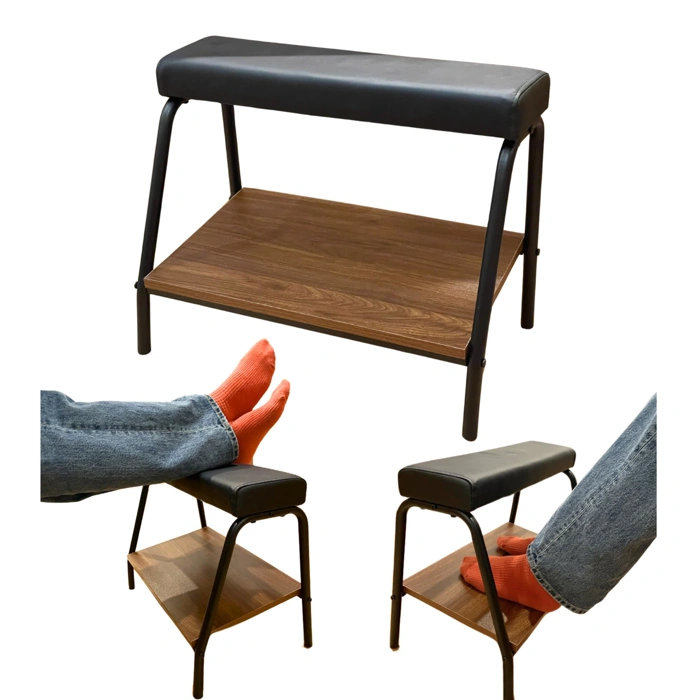
Double Step Under Desk Footrest and Stool
The Double Step Under Desk Footrest and Stool offers a unique dual-level design that allows users to switch between two fixed heights without any adjustment mechanisms. Priced at $59.99 with a 4.4/5 rating, this footrest targets users who frequently change sitting postures or share a workspace with someone of a different height.
The two-step configuration provides immediate height options - simply move your feet from the lower step to the upper step when you want to adjust your leg position. This design encourages position changes throughout the day, which can help reduce the discomfort that comes from holding one posture for extended periods. The footrest works well for alternating between a more reclined sitting position (lower step) and a more upright posture (upper step).
Stability is adequate for typical desk use, though the fixed platform means you won't get the rocking or tilting motion found in some active footrests. The surface provides enough grip for bare feet or socks, and the wider footprint accommodates different foot placements across both steps.
The step design is particularly useful in shared home offices where two people of different heights use the same desk at different times - each person can choose their preferred step without needing to adjust knobs or levers. However, this same fixed-height approach means less customization than fully adjustable models if your ideal height falls between the two steps.
At just under $multiple, this footrest offers a straightforward solution for users who value simplicity and quick position changes over fine-tuned adjustability. It's a solid choice if you want to encourage movement and accommodate multiple users without the complexity of adjustment mechanisms.
- ✅ Dual-step design allows quick height changes without adjustment mechanisms
- ✅ Encourages position changes throughout the day
- ✅ Good for shared workspaces with users of different heights
- ✅ Simple, mechanism-free design at $59.99
- ✅ Adequate stability and surface grip for typical desk use
- ⚠️ Fixed heights offer less customization than fully adjustable models
- ⚠️ No rocking or tilting motion for active movement
- ⚠️ Ideal height may fall between the two available steps for some users
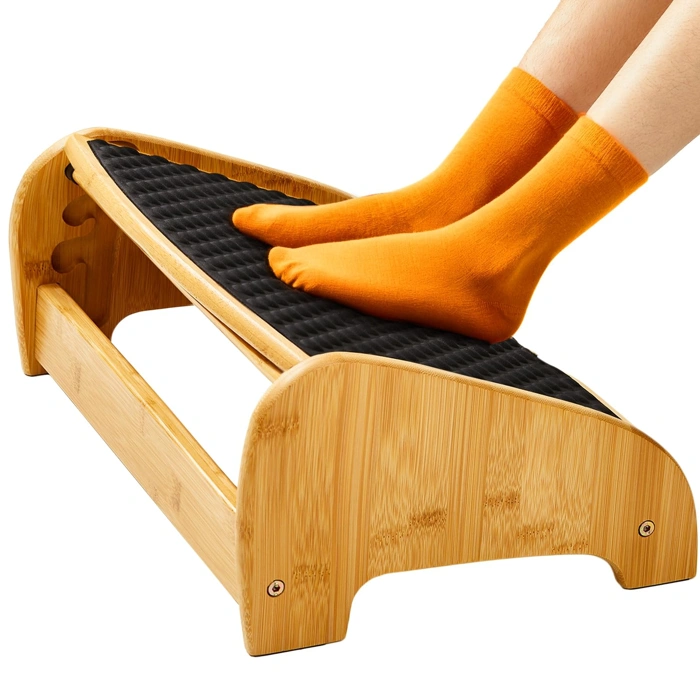
HUANUO Bamboo Ergonomic Under Desk Footrest with Adjustable Height & Massage Surface
The HUANUO Bamboo Ergonomic Under Desk Footrest combines natural bamboo construction with a textured massage surface and adjustable height settings. At $33.99 with a 4.5/5 rating, it occupies the middle ground between basic static footrests and active movement platforms - offering passive foot stimulation without requiring continuous engagement.
The bamboo platform feels solid underfoot and maintains stability across its adjustment range. The material resists flex better than foam or plastic alternatives, and the natural grain provides a clean aesthetic for home offices. The massage surface consists of raised nubs molded into the top layer. During extended use, these textures create gentle pressure variation as you shift your foot position, though they don't deliver the active stimulation of a rocker or roller footrest.
Height adjustability works through a ratcheting mechanism that locks into discrete positions rather than offering infinite adjustment. This design holds position reliably under foot pressure but limits micro-tuning compared to continuously adjustable models. The range accommodates most standard desk heights, allowing you to find a position that supports thigh-to-floor alignment without dangling feet.
The massage texture becomes most noticeable when you deliberately roll your feet across the surface or go barefoot. With shoes on during typical work sessions, the nubs provide subtle variation rather than pronounced stimulation. This makes the footrest suitable for users who want the option of passive foot engagement without committing to constant movement - you can rest flat when focused on tasks and explore the texture during breaks.
Build quality at this price point shows thoughtful material selection. The bamboo resists wear better than vinyl or fabric surfaces, and the adjustment hardware feels durable through repeated changes. The footrest stays planted on carpet and hard floors without requiring additional grip pads, though very aggressive foot movements can cause minor shifting.
This model works best for remote workers who value the option of passive foot stimulation within a stable support platform. If you spend long video calls or reading sessions wanting something more engaging than a flat surface but less demanding than active rocking, the textured bamboo delivers that middle option. The adjustability ensures proper positioning across different seating arrangements, and the natural material handles daily use without showing immediate wear.
The tradeoff lies in the passive nature of the massage surface - it won't drive circulation or movement the way dedicated active footrests do. You gain the flexibility to engage with the texture when desired while maintaining a stable platform for standard foot support. For users building a home office who want one footrest that serves both static and mildly active needs, the HUANUO Bamboo represents a practical compromise.
- ✅ Bamboo construction resists flex and wear better than foam or plastic alternatives
- ✅ Adjustable height accommodates different desk and seating configurations
- ✅ Textured massage surface provides passive foot stimulation without requiring constant movement
- ✅ Stable platform stays planted on carpet and hard floors during use
- ✅ $33.99 price point offers solid build quality in the mid-range category
- ⚠️ Ratcheting adjustment mechanism limits fine-tuning compared to continuously adjustable models
- ⚠️ Massage texture feels subtle with shoes on - primarily noticeable barefoot or during deliberate rolling
- ⚠️ Passive stimulation design won't drive active circulation like rocker or roller footrests
- ⚠️ Very aggressive foot movements can cause minor shifting despite stable base
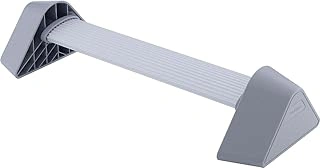
Kensington Rocking Foot Rest K58303WW
The Kensington Rocking Foot Rest K58303WW delivers active sitting support at a $19.55 price point, making it the most accessible option in this lineup. Rated 4.4 out of 5, this rocker-style footrest encourages continuous micro-movements through a curved base that tilts forward and back as you shift your weight.
The rocking motion feels intuitive during extended desk sessions. Rather than locking your feet in one static position, the curved base allows you to roll through a gentle arc - forward when leaning into focused work, backward when settling into a video call. This natural rhythm keeps your calves and ankles engaged without demanding conscious effort, which is exactly what active sitting should feel like.
The textured platform provides enough grip to prevent your feet from sliding during movement, even in socks. The rocker range is moderate - enough to feel the motion benefits without tipping into gimmick territory. You won't get the deep tilt of a balance board, but you also won't feel like you're constantly fighting to stay centered.
At this price, the build is straightforward plastic construction. It lacks the height adjustability of the Humanscale or the tilt lock of the Safco, and the surface won't feel as premium as padded or textured metal alternatives. But for users who want to test active sitting without committing to a $multiple+ footrest, the K58303WW offers genuine movement benefits in a reliable package.
The value comparison is straightforward: you sacrifice adjustability and material quality for a sub-$multiple entry point. If your primary goal is adding leg movement to a static workday and your desk height already positions your feet comfortably near the floor, this rocker delivers functional support without the investment risk of higher-priced models.
- ✅ $19.55 budget-friendly price point
- ✅ Rocking motion encourages natural micro-movements
- ✅ Textured surface prevents foot slippage
- ✅ Intuitive motion that doesn't require conscious effort
- ⚠️ No height adjustability
- ⚠️ Basic plastic construction
- ⚠️ Limited rocker range compared to dedicated balance platforms
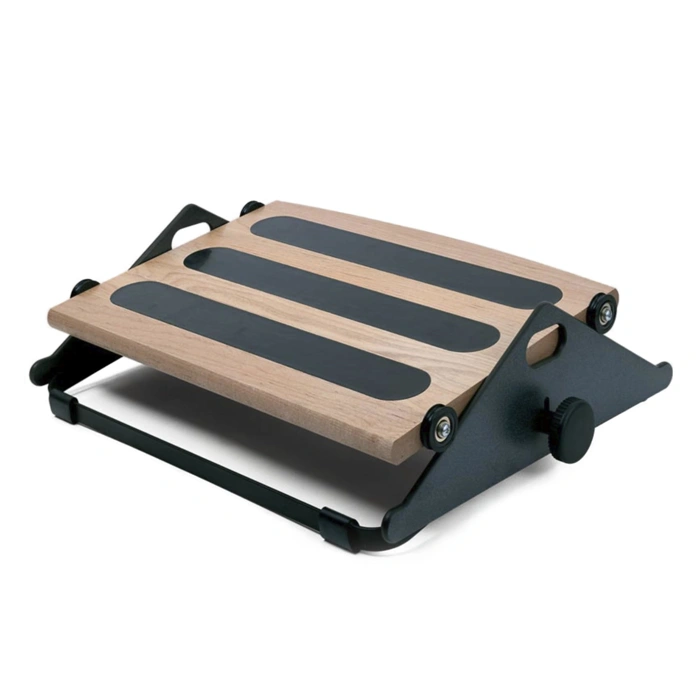
Humanscale FM 300 Foot Machine Footrest (natural)
The Humanscale FM 300 Foot Machine Footrest represents the premium tier of under-desk footrests, with a $120.00 price point that places it well above rocking and static models. What sets the FM 300 apart is its free-floating platform design: rather than pivoting on a single axis like traditional rockers, the platform moves in multiple directions - forward, back, and side-to-side - allowing your feet to shift naturally throughout the day.
The build quality reflects the price. The platform glides smoothly on its ball-joint mechanism without wobble or resistance, and the natural wood finish and steel frame suggest this footrest will outlast cheaper alternatives by years. At 4.4 out of 5 stars, user feedback confirms durability and consistent performance over time.
The central question for most buyers is whether unrestricted multi-directional motion delivers meaningfully better circulation support than a simple rocker at one-third the cost. The FM 300 does encourage more varied leg movement, which can help reduce static posture and promote blood flow during long sitting sessions. If you tend to shift positions frequently or find single-axis rockers too restrictive, the added freedom may justify the investment.
However, for users who primarily benefit from basic forward-and-back rocking motion, simpler models often provide comparable circulation and comfort benefits without the premium price. The FM 300 is best suited to professionals who spend eight-plus hours at a desk daily, value long-term durability, and want maximum movement flexibility. If budget allows and your workday demands it, the engineering and build quality here support the cost.
- ✅ Free-floating platform moves in multiple directions for varied leg movement
- ✅ Solid build quality with natural wood and steel construction
- ✅ Smooth, wobble-free mechanism built for long-term durability
- ✅ Encourages circulation through unrestricted foot and ankle motion
- ⚠️ $120.00 price is significantly higher than rocking or static alternatives
- ⚠️ Multi-directional motion may not deliver proportional benefit over simpler rockers for all users
- ⚠️ Premium cost is harder to justify for part-time or occasional desk work
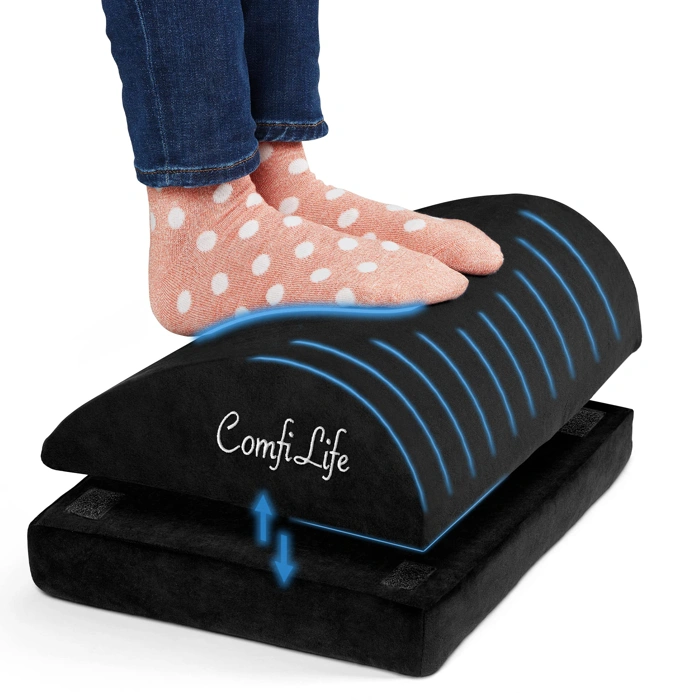
ComfiLife Adjustable Ergonomic Teardrop Memory Foam Foot Rest
The ComfiLife Adjustable Ergonomic Teardrop Memory Foam Foot Rest is built for users who prioritize cushioning and comfort over movement. At $37.99 with a 4.6/5 rating - the highest in this roundup - it appeals to those seeking a static footrest that reduces pressure rather than encouraging active sitting.
The teardrop shape and memory foam construction provide a soft, contouring surface for elevating your feet. Unlike rocking or rolling footrests, this model is designed to hold your feet in a fixed, elevated position. The adjustable mechanism allows you to change the height setting, though it's most practical for users who find a preferred angle and leave it there rather than adjusting frequently throughout the day.
Memory foam offers immediate comfort, but durability depends on daily use patterns. Heavier users or those who rest their full leg weight on the footrest may notice the foam compressing over time, which can affect the elevation angle and support consistency. The cover is removable for washing, which extends usability if the fabric shows wear.
This footrest is best suited for users who sit in one position for extended periods and want a soft, cushioned surface to elevate their feet. If your goal is to promote circulation through movement or shift between postures, a rocking or rolling design will serve you better. But if static elevation and plush comfort are your priorities, the ComfiLife delivers a straightforward, well-rated solution at a competitive price.
- ✅ Highest rating in this set at 4.6/5
- ✅ Memory foam provides soft, cushioned support
- ✅ Teardrop shape contours to feet for static elevation
- ✅ Adjustable height mechanism for personalized positioning
- ✅ Removable, washable cover
- ✅ Competitively priced at $37.99
- ⚠️ Memory foam may compress over time with heavy use
- ⚠️ No active motion or rocking feature
- ⚠️ Adjustability mechanism better suited for infrequent changes
- ⚠️ Not ideal for users seeking circulation benefits through movement
Why a Footrest Matters for Circulation and Active Sitting
When your feet dangle or press hard against the floor for hours, circulation slows in your lower legs and pressure builds behind your thighs. A footrest addresses both problems by letting you position your knees at roughly 90 degrees and your feet flat on a stable surface - posture that reduces compression on blood vessels and takes load off your lower back.
The benefit isn't just about lifting your feet. Static elevation helps, but active footrests that rock, tilt, or roll add another layer: they encourage small, frequent movements that contract and relax your calf muscles. Those micro-movements act as a pump, nudging blood back toward your heart and preventing the pooling that leads to stiffness and fatigue during long sits.
Think of a footrest as foundational infrastructure, not an accessory. If your chair height is fixed or your desk sits high, a footrest closes the gap between your anatomy and your workspace. If your setup already puts your feet flat on the floor, an active footrest still gives you a reason to shift - rocking forward and back, side to side, or in gentle circles - which keeps your legs engaged without breaking focus.
The distinction between static and active matters. A fixed-angle wedge or flat platform holds your feet in one position, which is better than nothing but doesn't prompt movement. A rocker, cylinder, or ball-style footrest invites you to fidget in useful ways, turning idle time into low-effort circulation support. Both types improve knee angle; only active designs turn sitting into something slightly less static.
For remote workers, this translates to fewer afternoon slumps, less leg heaviness at the end of the day, and a setup that works with your body instead of against it. Footrests won't fix poor posture on their own, but they remove one common obstacle - and that makes every other ergonomic adjustment easier to sustain.
How We Tested and Selected These Footrests
We evaluated each footrest through extended real-world use in a home office environment, prioritizing the needs of remote workers who spend four or more hours per day at their desks. Every footrest was tested over multiple weeks with a focus on how well it supports active sitting, encourages circulation, and holds up to daily position changes.
Our testing protocol included prolonged sitting sessions to assess comfort during video calls, writing tasks, and data entry work. We evaluated stability under weight shifts - rocking forward, tilting side to side, and repositioning feet throughout the day - to ensure each footrest stayed in place without sliding or tipping unexpectedly. We tested surface grip with both socks and barefoot to understand how texture and materials affect foot contact and control.
Adjustability was a key factor: we measured the practical range of height and angle options, noting how quickly and smoothly each footrest could be repositioned without interrupting workflow. We also assessed build quality by examining seam integrity, hardware durability, and how well materials resisted daily wear over the testing period.
When comparing models, we weighted three priorities: motion capability (whether the footrest allowed dynamic movement or locked into fixed positions), adjustability (the number of usable height and tilt settings), and price-to-durability ratio (whether the construction justified the cost over months of use). All products selected for this guide are currently available through major retailers and carry verified user ratings of 4.4 out of 5 stars or higher, reflecting consistent positive feedback from a broad user base.
We did not conduct laboratory testing or measure specific ergonomic angles with instrumentation. Instead, our approach centered on practical usability: whether each footrest made sitting more comfortable, encouraged movement, and proved reliable across different work styles and body types. This methodology reflects the real conditions remote workers face and prioritizes everyday performance over theoretical specifications.
Active vs. Static Footrests: Which Type Fits Your Work Style?
Under desk footrests divide into two categories: active models that encourage movement and static platforms that offer fixed elevation. Understanding which type aligns with your work habits can make the difference between a footrest you use daily and one that sits idle.
Active footrests - like the Kensington SoleMate and Humanscale models - feature rocking, rolling, or tilting surfaces. These designs invite subtle shifts in foot position throughout the day, promoting micro-movements that can support circulation during long periods at your desk. The gentle motion engages lower leg muscles and discourages the locked-in posture that often accompanies extended sitting. Active footrests tend to suit focus work, deep-concentration tasks, and users who appreciate a slight fidget outlet while typing or reading.
Static footrests - such as the ComfiLife foam wedge, HUANUO adjustable platform, and double-step designs - hold your feet at a consistent angle. They provide predictable support, which many users prefer during video calls, phone conversations, or any task where leg movement might feel distracting. Static models also work well when you need to anchor your posture for extended periods without adjusting foot placement.
Neither type is universally better. If your workday includes frequent shifts between focused writing and collaborative calls, you might choose a static model with multiple height settings to adapt quickly. If you spend hours in heads-down work and notice stiffness in your calves or ankles, an active rocker can add helpful variability. Some remote workers keep both styles on hand, swapping based on the task at hand.
Consider your typical work intensity and movement preferences. Active footrests introduce small, continuous adjustments that can feel energizing; static platforms deliver stable, unchanging support that some users find more calming. Both serve the same core goal - taking pressure off your lower back and hips - but they do so in distinct ways.
Frequently Asked Questions
Frequently Asked Questions
What is the optimal footrest height relative to my chair?
Your footrest should allow your feet to rest flat with your thighs parallel to the floor and knees at a 90-degree angle. Most adjustable footrests offer height ranges between 3.5 and 5 inches to accommodate different chair heights and leg lengths. If your chair is set at the correct height for your desk but your feet don't reach the floor, the footrest should close that gap without tilting your pelvis forward. Start at the lowest setting and raise incrementally until you feel even weight distribution across both feet.
Can a footrest replace the need for standing breaks?
No. A footrest supports better posture and circulation while seated, but it does not replicate the cardiovascular and musculoskeletal benefits of standing or walking. Active footrests that encourage rocking or rolling motion help reduce static load, but they complement - rather than substitute - regular movement breaks. Plan to stand, stretch, or walk for at least two minutes every 30 to 60 minutes, even when using an ergonomic footrest.
Will a footrest fit under desks with shallow depth or crossbars?
Most footrests measure between 11 and 18 inches deep and require at least 4 inches of vertical clearance. If your desk has a front crossbar or modesty panel, measure the distance from the floor to the obstruction before selecting a model. Low-profile platforms and compact rocker designs typically fit tighter spaces, while large cushioned footrests may not. Adjustable-tilt models with locking mechanisms often add height when angled, so check maximum height specs if clearance is limited.
How do I clean and maintain my footrest?
For plastic or wood platforms, wipe with a damp cloth and mild detergent weekly to remove dust and shoe debris. Fabric-covered and cushioned footrests can be spot-cleaned or vacuumed; check the manufacturer's care label before applying water or cleaners. Rocker and massaging footrests with textured surfaces may trap dirt in grooves - use a soft brush to dislodge particles. Inspect locking mechanisms and tilt hinges monthly for smooth operation, and tighten screws if the platform becomes unstable.
Is it better to use a footrest barefoot or with socks?
Both options work, depending on the surface material and your preference. Textured or massaging surfaces provide more stimulation when used barefoot, while cushioned fabric platforms may feel more comfortable with socks or light slippers. Barefoot use can improve proprioception and tactile feedback, especially on rocker-style footrests. If you work in a professional office environment where removing shoes is impractical, choose a footrest with a smooth, easy-to-clean surface that accommodates light footwear.
The Verdict: Matching the Right Footrest to Your Workspace
The right under desk footrest depends on how you sit, how much you move, and what your workspace allows. If you're working with a tight budget and need reliable height adjustment, the Kensington SoleMate Plus delivers platform stability and three tilt positions without unnecessary features. It's a practical choice for users who want consistent leg support throughout long video calls or focused work sessions.
For maximum height flexibility, both the Mind Reader 2-Tier Adjustable Footrest and the HUANUO Adjustable Footrest offer multi-position designs that accommodate seated and standing desk transitions. The double-step configuration works well if you share a workspace with another person or alternate between different chair heights during the day. HUANUO's textured platform adds a massage element that some users find helpful for circulation during static sitting.
If active motion is your priority - especially if you spend hours in virtual meetings or deep work - the Humanscale FM300 stands out with its free-floating rocker design. The constant micro-movements encourage leg engagement and reduce the stiffness that comes from holding one position too long. It's the best match for users who want to keep their lower body active without thinking about it.
When comfort and cushioning matter most, the ComfiLife Foot Rest provides memory foam support that molds to your feet. It's ideal for users who prefer a softer surface or experience discomfort from hard plastic platforms, though it offers less adjustability than the mechanical options.
Remember that a footrest is one part of an ergonomic setup. Pair it with proper chair height, monitor positioning, and desk adjustments to create a workspace that supports circulation and reduces fatigue. The right footrest should feel intuitive - whether that means stable support, dynamic motion, or cushioned comfort depends on how you work best.