An under desk footrest can improve sitting ergonomics by lifting your feet to a height that supports neutral hip and knee angles, encourages better spinal alignment, and reduces pressure on the backs of your thighs. But utility depends on measurable attributes - adjustable height range, surface grip, base stability, and whether the platform stays put during a full workday - not on vague comfort promises.
This guide focuses on footrests with height adjustment, stable bases, and surfaces that work with shoes or bare feet. We exclude non-adjustable platforms that force a single angle, rocking or motion boards that can distract during focused work, and lightweight units that slide across hard floors. The goal is to help you compare models on the criteria that determine whether a footrest will actually support better posture and circulation in your specific setup, rather than spend time repositioning it or leaving it unused under your desk.
Height adjustability matters because desk and chair combinations vary, and your ideal footrest height changes if you adjust your chair or switch between sitting and perching on a stool. Surface texture and material affect whether your feet stay in place or slip during the day. Base width and weight influence stability, especially on carpet or smooth flooring. Understanding these tradeoffs makes it easier to identify a footrest that fits your workspace and sitting habits, and to avoid models that look ergonomic but lack the mechanical features required for daily use.
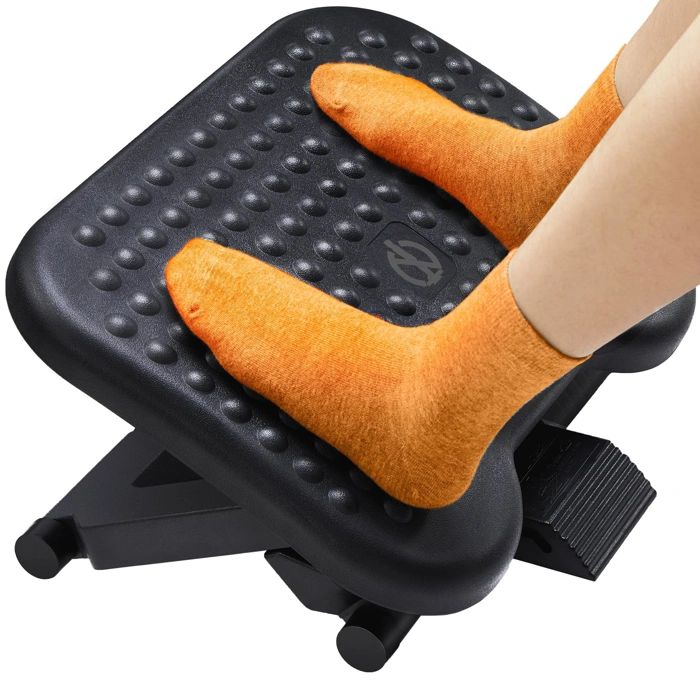
ErGear Adjustable Under Desk Footrest with 3 Heights and Massage Texture
The ErGear Adjustable Under Desk Footrest offers three height settings and a textured massage surface at a budget-friendly price point of $28.99. This model uses plastic construction to keep weight and cost down, making it a practical option for users who want adjustability without a significant investment.
The three height positions let you adapt the footrest to different chair heights or shift positions throughout the day. The textured platform provides tactile stimulation that can encourage micro-movements in your feet, which may support circulation during long periods of sitting. The surface pattern adds grip, reducing the chance your feet will slide forward.
Plastic construction means this footrest is lightweight and easy to move between workspaces or take home from the office. The tradeoff is that it may feel less stable under pressure than wood or metal alternatives, particularly at the highest setting or if you tend to press down heavily. Users who prioritize portability and price over maximum rigidity will find this balance acceptable.
At 4.3 out of 5 stars, the ErGear footrest performs well in its category. It suits users who want height flexibility and a stimulating surface texture without spending on premium materials. If your workspace changes frequently or you're testing whether a footrest improves your comfort, this model offers a low-risk entry point with useful adjustability.
- ✅ Three height settings for flexibility
- ✅ Textured massage surface encourages foot movement
- ✅ Lightweight plastic construction for portability
- ✅ Budget-friendly at $28.99
- ⚠️ Plastic may feel less stable than wood or metal
- ⚠️ Lighter weight can shift more easily under heavy pressure
Who Benefits Most from a Footrest
A footrest becomes useful when your chair and desk create a geometry problem your body can't solve comfortably. If your feet dangle or you perch on the front edge of the seat to touch the floor, a footrest fills the gap between your feet and the ground, letting you sit back into the chair's lumbar support.
Shorter individuals working at standard-height desks often face this mismatch. Raising the chair to bring eyes level with the monitor lifts feet off the floor. Without a footrest, the front edge of the seat presses into the back of the thighs, restricting circulation. A footrest restores a stable base and reduces that pressure.
People using chairs without seat-depth adjustment also benefit. If the seat pan is too deep, you slide forward to avoid pressure behind the knees, losing back support. A footrest allows you to sit fully back while keeping knees bent at a comfortable angle, typically between 90 and 110 degrees.
Fixed-height desks paired with non-adjustable chairs create similar problems. When you can't lower the desk or raise the floor, a footrest becomes the simplest mechanical correction, letting you position your hips and knees without compromise.
A footrest won't fix a chair that's too low relative to your desk height, forcing your shoulders and arms upward. In that case, raising the chair or lowering the desk surface is the primary fix; adding a footrest afterward addresses the new gap at your feet. The footrest is the last piece, not the first.
If your feet already rest flat on the floor with your knees at a right angle and your thighs parallel to the ground, a footrest may add little. The value appears when your current setup leaves your legs unsupported or forces you into awkward positions to reach the floor.
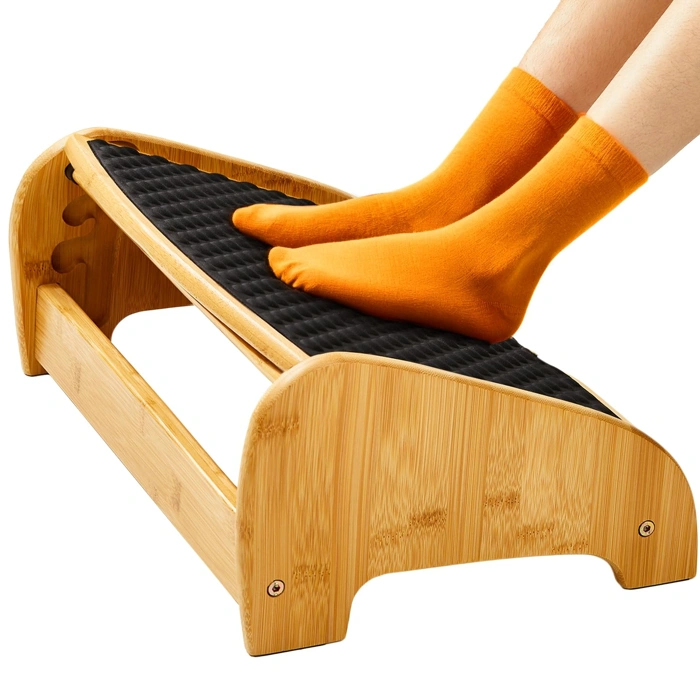
HUANUO Bamboo Ergonomic Under Desk Footrest with Adjustable Height & Massage Surface
The HUANUO Bamboo Ergonomic Under Desk Footrest offers bamboo construction with adjustable height settings and a textured massage surface. Priced at $29.98, it provides a natural-material alternative to plastic footrests while maintaining the height flexibility that many users need for proper leg support.
Bamboo as a frame material tends to resist warping better than solid wood and typically tolerates humidity changes common in home offices. The massage surface adds gentle texture under the feet, which some users prefer for circulation during long sitting sessions. The footrest's adjustment mechanism allows you to change height to match desk depth and personal leg length.
This footrest carries a 4.5/5 rating and suits users who prioritize natural materials and want a piece that visually blends with wood or bamboo desk furniture. The rigid bamboo platform delivers stable support without flex, though it weighs slightly more than foam or plastic alternatives and sits at a higher price point than basic models.
Consider this footrest if you value the durability and appearance of bamboo, need height adjustment to accommodate different seating positions, and prefer a textured surface over smooth plastic. The price reflects the material choice; users prioritizing budget or needing a lighter, portable option may find simpler designs more practical.
- ✅ Bamboo construction resists warping and humidity damage
- ✅ Adjustable height accommodates different leg lengths and desk setups
- ✅ Textured massage surface provides gentle foot stimulation
- ✅ Natural material aesthetic fits wood and bamboo furniture
- ⚠️ Higher price point than plastic or foam footrests
- ⚠️ Heavier weight reduces portability
- ⚠️ Rigid surface may feel firm for users preferring cushioned support
Core Criteria: What to Evaluate Before Buying
- Height adjustability: minimum 3 positions to accommodate different chair and desk pairings
- Surface texture: massage bumps for active stimulation vs. smooth for stability and sock comfort
- Base stability: non-slip bottom, weight distribution that prevents tipping during leg repositioning
- Tilt capability: fixed angle vs. rocker motion - consider focus and movement preference
- Material durability: wood for rigidity and longevity, foam for cushioning but faster wear
- Footprint size: platform width and depth must fit under desk and allow full foot placement
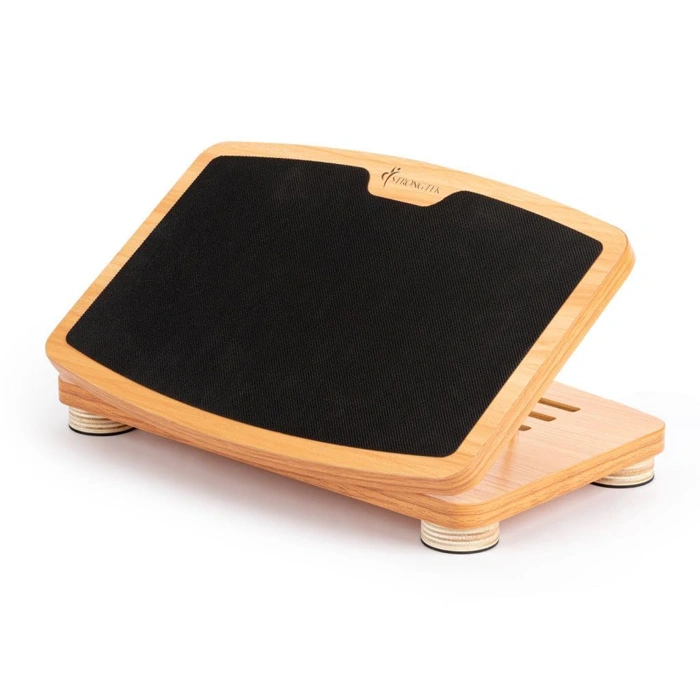
StrongTek Adjustable Wooden Under Desk Foot Rest with 3 Height Levels
The StrongTek Adjustable Wooden Under Desk Foot Rest offers a firm, stable platform built from solid wood, designed for users who prefer a smooth, consistent surface without cushioning or texture. The footrest locks into three fixed height positions, allowing you to select the angle that best supports your posture and circulation without the need for continuous adjustment.
Solid wood construction provides long-term durability and stability. The platform stays in place during use, and the three height levels - set via a simple mechanical lock - give you enough flexibility to match different chair heights or sitting positions. Because the surface is smooth and firm, your feet rest flat without sinking, which some users find more supportive for maintaining leg alignment throughout the day.
This footrest suits users who sit for extended periods and want a no-maintenance, dependable platform. The absence of texture or cushioning means it works well with shoes or bare feet, though users seeking massage or soft support may prefer a textured or foam alternative. The mid-range price reflects the quality of materials and the straightforward, reliable design.
At $35.99, the StrongTek footrest balances cost and durability. Its 4.8/5 rating indicates strong user satisfaction, and the fixed-height mechanism reduces the wear points common in continuously adjustable models. If you prioritize a stable, firm surface and expect to use the same height setting most of the time, this footrest delivers consistent performance without compromise.
- ✅ Solid wood construction for long-term durability
- ✅ Three fixed height positions provide stable, repeatable angles
- ✅ Smooth, firm surface supports consistent leg alignment
- ✅ Simple mechanical lock with no wear-prone adjustment points
- ✅ Works well with shoes or bare feet
- ⚠️ No texture or massage features for users seeking soft support
- ⚠️ Fixed height positions offer less flexibility than continuous adjustment
- ⚠️ Smooth surface may feel too firm for barefoot comfort seekers
Adjustable vs. Fixed Height: When Each Works
Adjustable-height footrests use ratchet mechanisms, notched posts, or pneumatic levers to lock into multiple positions, typically offering three to six height settings between 3 and 5 inches. Fixed-height platforms sit at a single angle - often around 4 inches at the back edge - and rely on a sloped surface to accommodate different foot positions.
Adjustable models are the better choice when more than one person uses the workstation, when you rotate between chairs with different seat heights, or when you wear shoes that vary significantly in heel thickness throughout the week. They also suit the trial period that follows a new desk or chair purchase, letting you experiment with angles until you find the setup that keeps your thighs parallel to the floor and reduces pressure behind your knees.
The tradeoff is mechanical complexity. Ratchet teeth can wear over time, and adjustment levers add parts that may loosen or break. Fixed platforms have fewer failure points and tend to weigh less, making them easier to reposition under the desk. If your chair height and shoe choice stay consistent and you know the angle you need, a well-built fixed footrest will deliver stable support without the extra hardware.
In shared or hot-desking environments, adjustability justifies the added weight and cost. In a dedicated home office where variables remain constant, a fixed platform often proves simpler and just as effective. The decision hinges on whether your workspace conditions will change or whether you value the ability to fine-tune fit as your comfort preferences evolve.
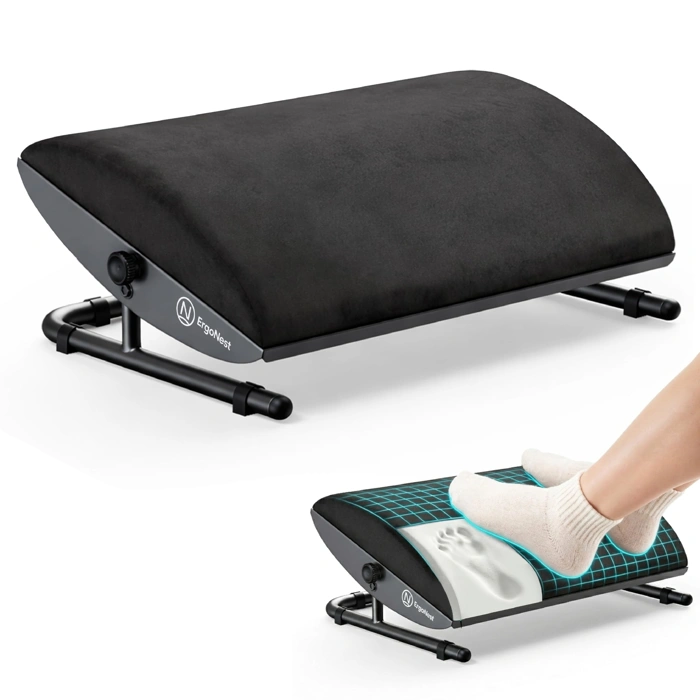
Under Desk Foot Rest – Adjustable Ergonomic Foot Rest with Steel Frame & Memory Foam Cushion, Soft Velour Finish for Superior Comfort, Designed to Improve Posture & Relieve Leg Pressure - ErgoNest™
The ErgoNest™ footrest combines a steel frame with memory foam cushioning and a velour surface, targeting users who prefer soft contact over rigid platforms. The steel frame provides structure, while the foam layer distributes pressure across the foot surface. The velour finish adds a soft-touch element, which may appeal to users working barefoot or in socks.
Memory foam compresses to conform to foot shape, reducing concentrated pressure points. This design prioritizes cushioned comfort, trading the firmness of hard-surface footrests for a softer feel. The adjustable frame allows height modification to align with different desk and chair configurations.
The tradeoff is durability: memory foam compresses with repeated use, and the cushioning layer may lose resilience over months of daily pressure. The velour surface requires periodic cleaning to manage dust and debris accumulation. At $49.90, this footrest sits above basic models, reflecting the material cost of foam and fabric finishes.
This option suits users who prioritize immediate comfort and prefer a cushioned surface. It is less appropriate for users seeking long-term rigidity or minimal maintenance. The 4.6/5 rating suggests general satisfaction, though individual experience will depend on weight distribution and usage frequency.
- ✅ Memory foam cushioning distributes pressure across foot surface
- ✅ Velour finish provides soft-touch comfort for barefoot or sock use
- ✅ Steel frame maintains structural stability under adjustable height settings
- ⚠️ Memory foam may compress and lose resilience with repeated daily use
- ⚠️ Velour surface requires regular cleaning to manage dust accumulation
- ⚠️ Higher price point at $49.90 compared to rigid platform alternatives
Material Tradeoffs: Wood, Foam, and Hybrid Designs
The material you choose determines how the footrest feels underfoot, how long it will hold its shape, and whether it matches your daily footwear habits. Wooden footrests deliver firm, unyielding support that maintains its height and angle indefinitely. The rigid surface works well if you wear shoes most of the day and prefer a stable platform that does not shift when you adjust your feet. Wood is also the easiest to clean and will not compress or degrade over months of use.
Memory foam footrests offer cushioning that conforms to the contours of your feet, which can feel comfortable for the first few weeks. However, foam compresses with repeated pressure, gradually reducing the effective height and firmness. If you work barefoot or in socks, the softer surface may feel pleasant initially, but expect the cushion to lose responsiveness over time. Foam is harder to clean if spills occur and may retain odors more than hard surfaces.
Hybrid designs layer a thin foam or fabric cover over a rigid core, aiming to combine the stability of wood or plastic with a softer contact surface. These can work well if you want mild cushioning without sacrificing structural integrity, though the foam layer will still compress faster than the base. Consider how often you reposition your feet during the day: if you shift frequently or use a rocking footrest, a firmer material will respond more predictably than foam that deforms under movement.
Match the material to your workspace reality. If you eat lunch at your desk, spill coffee occasionally, or work in a shared office where the footrest may be moved, a wipeable wood or plastic surface is more practical. If your feet stay in one position most of the day and comfort is the priority, foam may suit you better - just plan to replace it when compression becomes noticeable.
Surface Texture: Massage Bumps vs. Smooth Platforms
The surface you rest your feet on affects both comfort and circulation during extended sitting. Footrests typically feature either textured massage bumps or smooth, flat platforms, and the difference matters more than it appears.
Textured surfaces incorporate raised bumps, ridges, or nodules designed to stimulate the soles of your feet. This light stimulation encourages small shifts in foot position throughout the day, which can help maintain blood flow and reduce the numbness that develops when feet remain motionless for hours. The texture creates gentle pressure points that many users find comfortable when working barefoot or in thin socks.
Smooth platforms prioritize stable, consistent contact. They work well with dress shoes, thicker socks, or any footwear where you want even support without the bumps interfering. A flat surface also provides predictable placement - your feet won't slide into grooves or ridges, which matters if you shift positions frequently or need precise foot placement for desk height alignment.
The tradeoff centers on tolerance and footwear. Massage bumps that feel pleasant barefoot can become uncomfortable or distracting through shoe soles, especially during long conference calls or focused work. Some users find the texture stimulating for the first hour but intrusive by midday. Others appreciate the constant tactile feedback and notice less foot fatigue.
Consider your typical footwear and skin sensitivity. If you work barefoot or in light indoor shoes and tend toward cold feet or circulation concerns, textured surfaces may provide useful stimulation. If you wear dress shoes all day, prefer socks, or find textured surfaces distracting, a smooth platform will deliver more consistent comfort without requiring adaptation.
Some footrests offer dual-sided designs - textured on one face, smooth on the other - allowing you to flip the unit based on the day's footwear or preference. This flexibility removes the need to commit to a single surface style, though it adds a setup step each time you switch.
Stability and Floor Compatibility
A footrest that slides forward every time you shift your weight creates frustration and defeats the purpose of stable leg support. Base design determines whether the platform stays in place or becomes a daily annoyance.
Non-slip rubber feet are the standard solution for hardwood, tile, and laminate floors. Look for models with at least four contact points along the base perimeter. These pads grip smooth surfaces through friction and prevent the footrest from drifting during use. Larger contact patches distribute weight more evenly and reduce the chance of surface marks on softer hardwood finishes.
Weight distribution affects forward tipping, especially when you place both feet near the front edge of the platform. A wider base footprint or rear-weighted design counteracts this tendency. Lightweight models under two pounds may slide unless your foot pressure creates enough downward force to engage the friction material. Heavier platforms - typically those with steel frames or solid wood construction - resist movement through mass alone.
Carpet compatibility changes the equation. Rubber feet that grip hard floors can sink into medium-pile carpet, reducing stability and making height adjustments less predictable. Some manufacturers include alternate feet or carpet spikes that penetrate the pile and anchor into the subfloor. If you work on thick carpet, verify that the model either includes these accessories or has a wide, flat base that spreads load across a larger area to minimize sinking.
Test stability by applying pressure to the front edge of the platform with one foot while the footrest is empty. If it tips or slides easily, it will likely do the same under normal use. Models with rubberized bases or textured undersides generally outperform smooth plastic in real-world conditions, regardless of floor type.
Common Mistakes to Avoid
Many footrest purchases fail to deliver comfort because buyers overlook setup fundamentals or expect the accessory to solve problems it cannot address alone.
The most common mistake is choosing a fixed-height model before confirming the correct elevation for your leg length and chair settings. A footrest that forces your knees higher than your hips - or leaves your feet dangling - can worsen posture rather than improve it. Always verify that your model offers height adjustment across a range that suits your seated position.
Another frequent error is prioritizing massage rollers, heating elements, or texture novelty over core stability. A footrest that shifts during use disrupts your seated balance and makes it harder to maintain neutral alignment. Surface features add value only when the platform itself remains firmly anchored under load.
Ignoring floor compatibility leads to slipping on tile or vinyl and gouging on hardwood. Check whether the base includes non-slip coatings or pads suited to your workspace surface, and confirm that any rocker or tilt mechanism locks securely when you want a stable platform.
Finally, expecting a footrest to compensate for an incorrectly adjusted chair or desk height sets up disappointment. If your chair seat is too high or your desk forces you to reach upward, a footrest alone cannot restore ergonomic alignment. Adjust chair height first so your elbows rest near 90 degrees at keyboard level, then introduce the footrest to support your feet in a comfortable, slightly forward position. Treat the footrest as one element in a complete workstation setup, not a standalone fix for furniture that does not fit your body.
Final Takeaway
Choosing the right under desk footrest comes down to matching a few key attributes to your workspace and habits. Start with height adjustability - models that offer a range let you dial in the angle that keeps your thighs parallel to the floor and reduces pressure behind your knees. Fixed-height footrests work only if that single position suits your chair and desk setup perfectly.
Material choice shapes both support and longevity. Foam platforms compress over time but feel softer underfoot; plastic and wood hold their shape longer and provide firmer, more consistent support. If you work barefoot or in socks, a textured or fabric-covered surface improves grip and comfort. Smooth plastic works fine with shoes but can feel slippery otherwise.
Stability matters more than it seems. On carpet, a wide base or rubberized feet prevent the footrest from shifting when you reposition your legs. On hard floors, non-slip pads or enough weight keep it anchored without scratching the surface. A footrest that slides every time you move becomes another frustration rather than a support tool.
Remember that a footrest complements proper chair and desk height - it doesn't replace them. If your chair is too high or your desk too low, a footrest can bridge part of that gap and improve circulation by reducing leg pressure. But it won't fix a fundamentally mismatched workstation. Set your chair so your feet rest flat or slightly forward on the footrest, your knees stay at or just below hip level, and your forearms remain roughly parallel to the floor when typing. That combination keeps your posture neutral and reduces the fatigue that builds over a full workday.