We may earn a commission when you buy through links on this page, at no extra cost to you. How this works.
Sitting with your feet dangling or pressed flat against the floor for hours creates pressure behind your knees and restricts blood flow to your lower legs. A footrest lifts your feet to a more neutral angle, reducing strain on your thighs and encouraging subtle movements that keep circulation active throughout the day.
Shorter desks - those under 28 inches in height - often leave standard chairs too high for proper leg positioning. An adjustable footrest closes that gap by letting you fine-tune the height until your knees sit at or slightly below hip level, which distributes weight more evenly across your seat and reduces discomfort during long work sessions.
The right footrest offers a height range that matches your desk and chair combination, a surface that invites shifting rather than locking your feet in place, and a footprint small enough to fit under compact workstations. Texture matters: ridges, rollers, or gentle curves prompt you to rock or roll your feet, which activates calf muscles and discourages static posture.
We focused on models with verified adjustable height ranges, measurable platform dimensions, and durable construction. Foam-only cushions that compress unevenly over time were excluded, as were fixed-angle platforms that offer no adaptability. Products without clear height specifications or those marketed solely as footstools rather than ergonomic supports did not make the list.
Build quality separates a footrest that holds its position under shifting weight from one that creeps across the floor or loses its angle mid-afternoon. Look for non-slip bases, sturdy adjustment mechanisms, and materials that resist wear when your shoes drag across the surface daily.
What to Look for When Buying an Ergonomic Footrest
- Adjustable height range that matches your floor-to-knee measurement
- Surface texture or massage features for active foot movement
- Footprint size that fits under your desk without blocking caster wheels
- Anti-slip base and top surface to prevent sliding during use
- Build material and weight capacity for long-term durability
- Desk clearance for rocker or tilt motion if you prefer active sitting
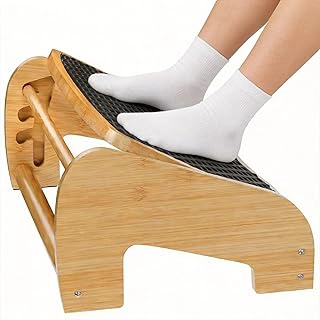
Bamboo Ergonomic Adjustable Under Desk Footrest with 3 Height & Angle Settings, Pebble Massage Surface
If you work at a shorter desk or prefer natural materials, this bamboo footrest offers three height and angle combinations that adapt to different seating positions. The construction uses solid bamboo with a pebbled texture across the surface, encouraging small movements that help maintain circulation during long periods at your desk.
The adjustable frame locks into three preset positions, letting you switch between a gentle incline and a steeper angle depending on whether you need more leg support or active foot engagement. The pebble massage surface provides textured contact that keeps your feet from sliding and invites minor shifts in position throughout the day. This design suits compact workspaces where clearance under the desk is tight, since the footrest remains relatively low-profile even at its highest setting.
At $33.99, this footrest falls into an accessible price range while delivering bamboo durability. The natural wood finish resists wear better than fabric-covered options, and the surface wipes clean without absorbing spills or odors. Because bamboo is rigid, you will feel firm support rather than cushioned give - an advantage if you want stability, but a tradeoff if you prefer softer contact under your feet. The width accommodates most users, though individuals with larger shoe sizes or those who like to spread their feet wide may find the platform narrower than cushioned foam alternatives.
The textured surface promotes micro-movements that can reduce the sensation of stiffness in your lower legs, a practical feature when sitting for extended intervals. The three-position adjustment covers a range that works for standard office chairs and shorter desk heights, making this footrest a straightforward choice when you need reliable elevation without complicated mechanisms.
- ✅ Three height and angle settings for different seating positions
- ✅ Pebble massage surface encourages foot movement and circulation
- ✅ Bamboo construction offers durability and easy cleaning
- ✅ Compact footprint fits under shorter desks
- ✅ Affordable at $33.99
- ⚠️ Rigid wood surface lacks cushioning compared to foam alternatives
- ⚠️ Platform width may feel narrow for larger shoe sizes or wide foot placement
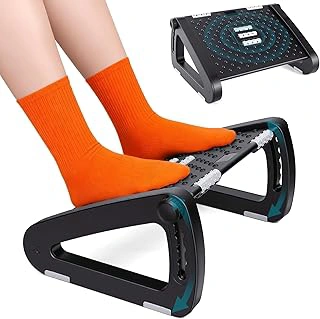
Ergonomic Adjustable Under Desk Footrest with Roller Massager
Shorter desks and tight clearance spaces often leave your feet dangling or cramped against the floor, reducing circulation during long stretches of sitting. This adjustable footrest combines height flexibility with a built-in roller massager bar, offering a budget-friendly option at $23.99 for users who want active foot engagement without stretching their workspace footprint.
The roller mechanism runs along the front edge of the platform, letting you roll your feet back and forth to encourage blood flow and reduce static pressure on your heels and arches. Unlike textured surfaces that provide passive stimulation, the roller invites deliberate movement - useful when you feel stiffness building or notice your legs getting heavy. The motion itself is smooth enough for casual rolling while you read or type, without demanding focused attention.
Height adjustment lets you dial the platform up or down to match your chair and leg length, which matters when desk apron clearance is limited. The compact footprint fits under narrow desks without blocking drawer access or bumping chair wheels, and the adjustable range accommodates users who need a modest lift rather than a tall riser. Setup is tool-free: you twist the corner knobs to lock the height, then position the footrest where your feet naturally rest.
Compared to the bamboo model reviewed earlier, this footrest trades natural-material durability and a wider surface for a lower price and an active massage feature. The roller bar is made from plastic, so long-term wear under daily use remains to be seen, but the design prioritizes affordability and function over premium materials. If you want stimulation beyond a static platform and can work within a smaller surface area, the roller mechanism adds value. If you prefer a solid, natural surface and expect years of heavy use, the bamboo option's higher upfront cost may prove more economical.
The footrest works best for users who sit in one position for extended periods and benefit from occasional foot movement to keep circulation steady. The roller encourages small, frequent adjustments that break up the monotony of static posture, which can help prevent the tingling or numbness that comes from prolonged pressure on the back of your thighs. For shorter-desk environments where every inch of clearance counts, the slim profile and adjustable height make this a practical, low-cost entry point into ergonomic foot support.
- ✅ Budget-friendly at $23.99
- ✅ Roller massager bar encourages active foot movement and circulation
- ✅ Adjustable height fits varied leg lengths and tight desk clearance
- ✅ Compact footprint works under narrow desks
- ✅ Tool-free height adjustment
- ⚠️ Plastic roller may wear faster than solid materials
- ⚠️ Smaller surface area compared to wider bamboo models
- ⚠️ Durability uncertain under daily, long-term use
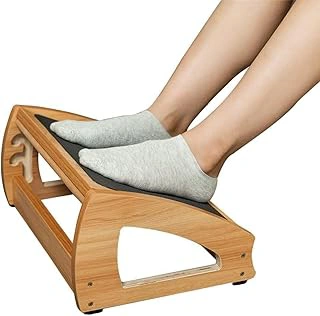
StrongTek Ergonomic Wooden Under Desk Footrest, 3-Height Adjustable, Anti-Slip
The StrongTek wooden footrest delivers a straightforward solution when you need consistent elevation without moving parts. Its solid wood construction and anti-slip surface provide a stable platform for users who prefer a fixed rest under shorter desks, and the three height positions - adjustable by flipping the frame - accommodate different leg lengths and seated postures without requiring complicated mechanisms.
Build quality centers on durability. The wooden frame supports heavier users without flex, and the textured anti-slip surface keeps feet in place during long work sessions. Unlike massage-surface models with active rollers or bumps, this footrest prioritizes grip and stability over circulation stimulation. You trade the tactile engagement of textured designs for a wider, more secure base that won't shift when you adjust your position.
Height adjustment works by repositioning the frame: three locked settings replace continuous tilt found in rocker models. This static approach suits users who establish one preferred angle and maintain it throughout the day. Shorter desks benefit from the lower profile in its base configuration, and the larger width provides enough room for feet to rest side-by-side without crowding.
The StrongTek earns a 4.4/5 rating and costs $39.99, positioning it between budget foam wedges and premium adjustable platforms. Its anti-slip surface and solid construction justify the mid-range price for users who value stability and simplicity over dynamic movement or massage features.
- ✅ Solid wood construction supports heavier users without flex
- ✅ Anti-slip surface keeps feet secure during long sessions
- ✅ Three height positions suit different leg lengths and desk clearances
- ✅ 17.7-inch width accommodates side-by-side foot placement
- ✅ Static design eliminates movement for users who prefer fixed elevation
- ⚠️ No massage texture or circulation-stimulating surface features
- ⚠️ Height adjustment requires flipping the frame rather than continuous tilt
- ⚠️ Lacks active engagement compared to rocker or roller models
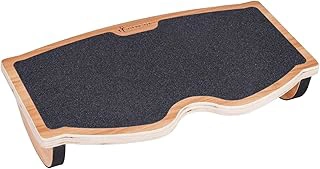
StrongTek Ergonomic Wood Rocker Balance Board Foot Rest, Non-Slip, 18" Wide
The StrongTek rocker board takes a completely different approach than adjustable footrests by keeping your feet in motion throughout the day. The 18-inch-wide wooden platform sits on a curved base that rocks forward and backward, encouraging continuous micro-movements in your legs and ankles while you sit.
This active design addresses circulation differently than fixed-height models. Instead of positioning your feet at a static angle, the rocking motion alternates pressure points and keeps blood flowing through repeated muscle engagement. Users who tend to fidget or shift positions frequently often find this movement more comfortable than staying locked in one posture, even an elevated one.
The non-slip surface helps your feet stay planted during the rocking motion without requiring shoes, and the 18-inch width accommodates most foot positions - parallel, angled, or one foot at a time. The 4.7/5 rating reflects consistent satisfaction with build quality and the balance between stability and movement range.
However, the rocker design requires clearance underneath your desk for the forward-and-back arc, which can be tight if you're already working with limited legroom under a shorter desk. There's no height adjustment, so your feet rest at floor level plus the rocker's curve - fine for most standard desk heights, but not customizable if you need a specific elevation. And if you prefer your feet to stay completely still while you focus, the lack of a locking position might feel distracting rather than helpful.
This footrest works best for people who want to add gentle movement to their sitting routine and have enough under-desk space for the rocking motion. If you need precise height adjustment or a stable platform that doesn't shift, a fixed or adjustable footrest will be a better match.
- ✅ Rocking motion encourages continuous leg movement for circulation
- ✅ 18-inch width accommodates varied foot positions
- ✅ Non-slip surface works without shoes
- ✅ Sturdy wood construction with 4.7/5 rating
- ⚠️ No height adjustment - feet rest at floor level plus curve
- ⚠️ Requires under-desk clearance for rocking arc
- ⚠️ Not suitable if you prefer feet to stay stationary
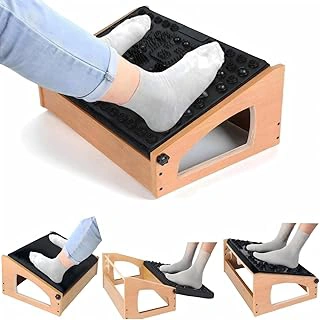
Ergonomic Under Desk Foot Rest, 4 Adjustable Height, Flip Over Design
Users who want to experiment with different footrest heights will appreciate the four distinct positions this flip-over design offers. By rotating the platform, you can choose from the listed size, the listed size, the listed size, or the listed size - a degree of granularity that three-height models cannot match. This makes it easier to find the sweet spot where your thighs stay level and your feet feel supported without trial-and-error guesswork.
The compact footprint fits under shorter desks where bulkier adjustable mechanisms would scrape the underside or force you to sit farther back than you'd like. At $29.99, it undercuts piston-based alternatives by roughly half, making it a practical choice for remote workers testing ergonomic setups on a budget. The trade-off is build simplicity: there are no levers or pneumatic columns, so switching heights means lifting your feet and flipping the unit over.
That flip-over process takes only a few seconds, but it does interrupt your workflow if you adjust frequently throughout the day. Once you settle on a preferred height, the platform stays stable during use. The surface is flat and smooth, which some users find comfortable for long stretches, while others miss the massage textures or rocker motion that higher-priced models provide. If you primarily need reliable height options and short-desk compatibility without extra features, this footrest delivers focused utility at an accessible price point.
- ✅ Four height positions offer more granular adjustment than three-height competitors
- ✅ Compact design clears shorter desk frames without scraping
- ✅ Budget-friendly at $29.99, roughly half the cost of piston models
- ⚠️ Flipping the unit to change height interrupts workflow
- ⚠️ Flat surface lacks massage texture or rocker motion
- ⚠️ Simple construction may feel less premium than lever-adjusted alternatives
How to Match Footrest Height to Your Desk and Chair
Matching footrest height to your workstation starts with a simple measurement: sit in your chair at your normal desk height and measure the distance from the floor to the underside of your knee, wearing the shoes you typically use. This measurement tells you the minimum adjustment range your footrest needs to reach. Most people fall between 3 and 6 inches, but taller individuals may need more clearance, while shorter users often require adjustable options that go lower than the typical fixed 4-inch platform.
Your desk clearance matters just as much. Measure the vertical space between your chair seat at its lowest comfortable position and the underside of your desk. If that gap is less than 8 inches, taller footrests and rockers may hit the desk or force you to raise your chair too high, which defeats the purpose. Under-desk clearance becomes especially tight with keyboard trays or shallow desks.
The target posture uses right angles: knees bent at roughly 90 degrees, hips at 90 degrees or slightly open, and feet resting flat without pressure behind the knees. When your chair is too high for your feet to reach the floor, a footrest fills that gap and keeps your thighs parallel to the ground rather than angled down. If your knees ride higher than your hips, circulation suffers and pressure builds on the back of your legs.
Among the products reviewed, the Humanscale FR300 adjusts from 3.5 to 5 inches and fits most standard desks without interference. Its tilt range accommodates users between 5'2" and 5'10" without requiring extreme chair height changes. The Ergodriven Topo offers a fixed 2.7-inch peak, working well for taller individuals who need only slight elevation and have at least 10 inches of under-desk space for the standing-style platform. The Fellowes Climate Control footrest reaches up to 4.75 inches and includes a narrow 17.5-inch width, useful when desk legs or file cabinets limit floor space.
If your chair has a wide seat-height adjustment range - typically 16 to 21 inches - you can match almost any footrest by lowering the chair until your feet rest comfortably on the platform and your monitor stays at eye level. When chair range is limited or you share a workstation, choose a footrest with at least 2 inches of adjustment so multiple users can dial in their preferred angle without reconfiguring the entire desk.
Fixed-Height vs. Adjustable vs. Rocker: Which Design Fits Your Work Style
Footrests fall into three basic categories, each built around a different assumption about how you sit and what you need from the floor up.
Fixed-height platforms are the simplest. They hold one angle and one elevation. If your chair and desk are already dialed in and you need a stable surface to rest your feet, a fixed footrest removes variables and costs less. The tradeoff is obvious: you can't adjust for different shoes, tasks, or users. If someone else works at your desk or you experiment with seat height, you'll feel the mismatch quickly.
Adjustable models add tilt and height controls, typically through notched levers or screw knobs. This flexibility makes them practical for shared workstations or anyone still figuring out their ideal setup. You can raise the platform for flats, lower it for boots, tilt it forward during focused work, or flatten it when you lean back. The added mechanisms mean more parts, slightly higher weight, and a modest price increase. But the ability to adapt pays off if your routine or footwear changes day to day.
Rocker footrests let you pivot or rock the platform while you work. The motion encourages small shifts in ankle and calf position, which can help circulation during long static periods. Rockers require more floor clearance and a willingness to tolerate movement underfoot. Some people find the motion distracting; others use it to stay engaged without leaving the chair. If your desk has a modesty panel or low crossbar, measure carefully - rockers need room to swing.
Your work style narrows the field. If you stay planted during video calls or detailed spreadsheet work, a fixed or adjustable platform offers predictable support. If you fidget, shift posture often, or spend hours in back-to-back meetings, a rocker gives your legs something to do without breaking focus. Adjustable designs split the difference when you value both stability and the option to tweak angles between tasks.
How Footrests Support Circulation During Long Sitting Sessions
Sitting for extended periods can compress the back of your thighs against the chair edge, restricting blood flow to your lower legs and feet. A footrest lifts your feet slightly, shifting your weight distribution and reducing that pressure point. When your legs rest at a comfortable angle rather than dangling or pressing hard into the seat, circulation improves and swelling becomes less common.
Venous return - the process of blood moving back toward the heart - benefits from slight leg elevation and gentle movement. Static posture slows circulation, while adjustable footrests that let you change height or rock your feet encourage micro-movements throughout the day. Textured or massage surfaces add another layer of stimulation, prompting you to shift your feet and activate calf muscles, which helps pump blood upward.
Rocker-style footrests encourage active sitting by letting you roll your feet forward and back. This motion engages the lower leg muscles and prevents the stiffness that builds when your feet stay locked in one position. Flat platforms with adjustable heights work well if you prefer stability but still want to reduce thigh compression by finding the right leg angle.
The key is matching footrest design to your chair height and desk clearance. If your chair sits low or your desk has limited space underneath, a compact footrest with multiple height settings gives you room to adjust without forcing an awkward posture. When your feet rest comfortably and your thighs stay parallel to the floor or angled slightly downward, circulation stays steady and discomfort decreases over long work sessions.
Common Footrest Mistakes That Reduce Comfort and Effectiveness
Placing a footrest too far forward forces you to extend your legs beyond a comfortable angle, which shifts weight away from the backrest and increases lower back strain. Position the footrest close enough that your knees remain bent at roughly ninety degrees when both feet rest fully on the platform.
Setting the height too low leaves your thighs sloped downward, concentrating pressure behind the knees and restricting circulation. Conversely, raising it too high tilts your pelvis forward, flattening the natural lumbar curve. Adjustable models like the Humanscale FR300 and Eureka Ergonomic FTR allow you to dial in the precise height that keeps your thighs parallel to the floor.
Using a rocker footrest under a non-adjustable desk invites clearance problems. The ErgoFoam Adjustable Foot Rest and Mind Reader Multi-Position require enough vertical space to tilt without jamming against the underside of the desk, so measure your knee clearance before committing to a rocker design.
Skipping chair height adjustment first is a frequent oversight. Lower your seat until your feet meet the footrest naturally, rather than raising the footrest to meet a chair set too high. This simple sequence reduces thigh pressure and stabilizes your pelvis. If your chair drops low enough that your hips sit below your knees, a footrest becomes unnecessary or even counterproductive.
Ignoring surface texture can also undermine comfort during long sessions. Flat, hard platforms concentrate pressure on the heels, while textured or cushioned surfaces distribute load more evenly. The Teeter Under-Desk Foot Rocker and Eureka Ergonomic FTR both feature contoured designs that encourage subtle movement, reducing the fatigue that comes from static foot placement.
Frequently Asked Questions About Ergonomic Footrests
Finding the right footrest setup often raises practical questions about fit, function, and maintenance. Here are answers to the most common concerns when choosing an ergonomic footrest for shorter desks and circulation support.
What is the ideal footrest height for shorter desks?
For desks with limited clearance - typically 24 to 26 inches from floor to underside - look for footrests that adjust from 3.5 to 5 inches at their lowest setting. This range allows your thighs to stay roughly parallel to the floor without the footrest forcing your knees too high. The Humanscale FR300, for example, offers a 3.5-inch minimum height and works well in tight spaces, while the Fellowes Energizer adds adjustability up to 6.75 inches for users who need more lift as posture or task changes throughout the day.
Do rocker boards fit under standard desks?
Most rocker-style footrests measure 4 to 5 inches tall at rest and require an additional 2 to 3 inches of clearance for the rocking motion. The FEZIBO Wooden Rocker sits 4 inches high and needs about 17 inches of front-to-back depth, making it suitable for desks with at least 25 inches of knee clearance. If your desk has a center drawer or crossbar that drops below 24 inches, a low-profile adjustable model may be a safer choice.
How do I clean wood versus plastic footrest surfaces?
Plastic surfaces like those on the Fellowes Energizer or Humanscale FR300 can be wiped down with a damp cloth and mild soap, and they resist moisture well if you wear shoes indoors. Wood footrests - such as the FEZIBO Rocker - should be cleaned with a barely damp cloth and dried immediately to prevent warping or finish damage. Avoid soaking or using harsh cleaners on bamboo or composite wood, and check the manufacturer's care instructions if the surface has a stain or lacquer finish.
Do massage textures actually help circulation?
Textured surfaces and rolling massage elements encourage micro-movements in your feet, which can promote blood flow during long sitting sessions. The Fellowes Energizer includes two rotating massage rollers, and the Eureka Ergonomic FTR includes a textured platform that invites small shifts in pressure. While these features don't replace movement breaks, they can reduce the static pressure that contributes to discomfort and sluggish circulation in the lower legs.
Should I choose adjustable or fixed-height footrests?
Adjustable footrests - like the Mind Reader or Fellowes Energizer - let you fine-tune height as your chair setting or footwear changes, making them a practical choice if you switch between flats, heels, or barefoot sitting. Fixed-height options, including rocker boards, work well if your desk and chair are already set to consistent positions and you value simplicity and durability over adjustability. If you're unsure about your ideal height or share a workspace, adjustable models offer more flexibility as you dial in your setup.
Choosing the Right Footrest for Your Desk Setup and Circulation Goals
Selecting the right footrest depends on three factors: how much clearance your desk allows, what type of movement or support you need, and which circulation features matter most for your workday.
If your desk has limited vertical space, measure the distance from the floor to the underside of your work surface before you buy. Many adjustable models rise to 5 or 6 inches, which can interfere with low-profile desks or keyboard trays. Look for footrests that list a collapsed or minimum height specification to confirm compatibility.
For circulation goals, consider whether you sit in one position for long stretches or prefer to shift frequently. Roller massage surfaces encourage small foot movements that can help reduce stiffness. Rocker platforms let you tilt forward and back, keeping your lower legs active without leaving your chair. Static platforms with textured tops offer stable support if you prioritize a fixed angle and anti-slip grip.
Adjustability becomes important when multiple people share the same workspace or when your chair height varies. Notched height settings give you repeatable positions, while smooth tilt adjustments let you fine-tune the angle to match your thigh slope. If you alternate between shoes and barefoot work, a removable cover or easy-clean surface saves maintenance effort.
Budget matters, but the least expensive option is not always the best value if it lacks the height range or surface type you need. Compare the specific features that address your setup constraints and circulation priorities, then choose the footrest that solves your most pressing issue first.