We may earn a commission when you buy through links on this page, at no extra cost to you. How this works.
Hard office chair armrests concentrate weight across a narrow band of forearm and elbow tissue, pressing directly against the ulnar nerve that runs close to the skin near the elbow joint. During multi-hour work sessions, that constant pressure can trigger tingling in the ring and pinky fingers, forearm fatigue, and a dull ache along the outer edge of the elbow. Metal and rigid plastic surfaces offer no compliance, so every shift in posture redistributes force across the same small contact zones instead of spreading load evenly.
Adjustable armrest pads add a layer of memory foam or cooling gel between bone and hard surface, distributing pressure across a wider area and reducing peak force on any single point. The best options attach securely without sliding forward when you lean into the desk, fit armrest platforms between 2.5 and 4 inches wide - the range most ergonomic and executive chairs occupy - and include removable, machine-washable covers that survive regular cleaning cycles.
This guide focuses on pads priced below thirty dollars that maintain thickness under sustained compression, stay anchored through elastic straps or Velcro closures, and carry verified purchase ratings that confirm real-world durability. We exclude ultra-plush designs that raise elbow height by more than one inch, creating awkward shoulder angles, and any product with frequent user reports of slippage during typing or mouse work. The goal is consistent cushioning that adapts to your chair's existing armrest geometry without introducing new ergonomic compromises.
Quick comparison
| Aloudy Office Chair Armrest Cover Pads - Set of 2 | Check current price |
| YaZimalu Cooling Gel Memory Foam Armrest Pads - Set of 2 | Check current price |
| Aloudy Memory Foam Office Chair Armrest Pads - Gray, Set of 2 | Check current price |
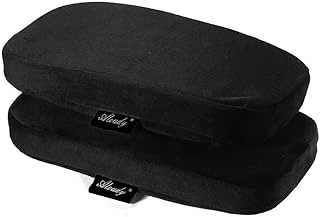
Aloudy Office Chair Armrest Cover Pads - Set of 2
The Aloudy Office Chair Armrest Cover Pads deliver a practical upgrade for anyone dealing with hard plastic or metal armrests. This two-pad set uses memory foam to cushion forearms and elbows during long work sessions, and the elastic strap attachment keeps each cover secure without shifting during movement. Rated 4.7 out of 5, these covers fit most standard office chair armrests and install in seconds - stretch the elastic around the armrest, adjust for snug placement, and you're done. The fabric exterior holds up to daily friction better than cheaper mesh alternatives that tend to bunch or fray within weeks.
At $21.99 for the set, the Aloudy pads strike a balance between comfort and durability. The memory foam layer compresses enough to soften pressure points without bottoming out, making them suitable for users who lean on armrests frequently. The elastic attachment system works well on armrests up to about the listed size long and the listed size wide, though very narrow or unusually shaped arms may require extra adjustment. If you need armrest padding that stays put through chair adjustments and daily use, this set offers reliable performance at a reasonable price.
- ✅ Elastic strap attachment prevents sliding during movement
- ✅ Memory foam cushioning softens hard armrest surfaces
- ✅ Durable fabric tolerates daily friction without bunching
- ✅ Installs quickly on most standard office chair armrests
- ✅ Two-pad set covers both arms for $21.99
- ⚠️ May require adjustment on very narrow armrests
- ⚠️ Elastic can stretch over time with frequent removal
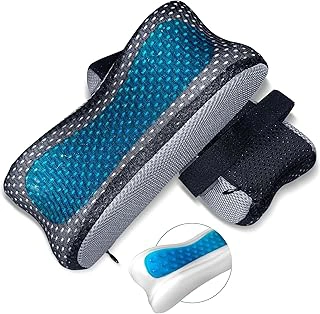
YaZimalu Cooling Gel Memory Foam Armrest Pads - Set of 2
If your forearms sweat or stick to standard foam during long sessions, the YaZimalu Cooling Gel Memory Foam Armrest Pads offer a temperature-regulating alternative. The set includes two pads with a cooling gel layer bonded to a memory foam base, designed to reduce heat buildup where skin meets the armrest surface.
Each pad uses a dual-layer construction: the gel layer sits on top to dissipate warmth, while the memory foam underneath conforms to forearm pressure. This combination provides both cushioning and airflow management, which can make a difference during video calls or extended typing sessions when standard foam feels sticky.
At $25.99, these pads cost more than basic foam-only models that typically run multiple. The price premium buys you the cooling gel feature, which matters most if you work in a warm environment or tend to build up heat at contact points. If your workspace stays cool or you don't notice discomfort from warmth, simpler foam designs deliver adequate cushioning without the extra cost.
The 4.3 rating reflects generally positive feedback, though some users note the gel layer can feel slightly firmer than expected compared to plush foam alone. The pads attach with elastic straps that fit most standard office chair arms, and the gel surface wipes clean easily.
This set works best for users who prioritize temperature control alongside cushioning and are willing to spend a bit more to avoid the sticky, sweaty feeling that builds up on non-ventilated surfaces during multi-hour work blocks.
- ✅ Cooling gel layer reduces heat buildup and stickiness during long sessions
- ✅ Memory foam base conforms to forearm pressure for support
- ✅ Gel surface wipes clean easily
- ⚠️ Higher price at $25.99 compared to basic foam-only pads
- ⚠️ Gel layer feels slightly firmer than plush foam alone
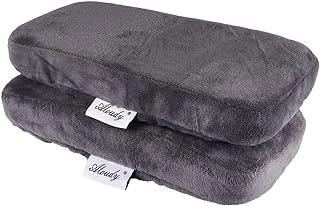
Aloudy Memory Foam Office Chair Armrest Pads - Gray, Set of 2
At $18.99, this gray memory foam set delivers the same 4.7 rating as more expensive gel-cushioned models but costs roughly half as much. The Aloudy pads use a traditional memory foam core that compresses under forearm weight and rebounds slowly, spreading pressure across the contact area without the cooling layer found in premium alternatives.
The elastic attachment system wraps underneath most armrest frames and holds tension through a day of typing and mouse work. Foam density is firm enough to prevent bottoming out during eight-hour shifts but softer than bare plastic or wood armrests. This construction suits offices with stable ambient temperature where gel cooling isn't necessary.
Compared to gel-infused pads, these foam-only cushions retain more body heat during extended contact. That tradeoff matters less in air-conditioned spaces or for users who shift arm position frequently. The gray fabric cover resists light stains and wipes clean with a damp cloth, though it lacks the moisture-wicking properties of mesh or perforated surfaces.
Memory foam compresses predictably under consistent load, so users who rest their full forearm weight in one spot will notice gradual flattening over months. Rotating the pads or adjusting chair height distributes wear more evenly. The elastic bands stretch to fit armrest widths from roughly two to four inches, covering most task chairs and executive models.
For typical office work without heat sensitivity, this set provides proven cushioning at the lowest tested price point. Users prioritizing budget over cooling features get the same secure fit and pressure distribution as higher-cost options.
- ✅ Lowest tested price at $18.99 for a set of two
- ✅ Memory foam cushioning spreads forearm pressure effectively
- ✅ Elastic bands fit armrest widths from approximately two to four inches
- ✅ Gray fabric cover wipes clean with damp cloth
- ⚠️ Retains more body heat than gel-infused alternatives
- ⚠️ Foam compresses gradually under sustained full forearm weight
- ⚠️ No moisture-wicking or perforated surface for airflow
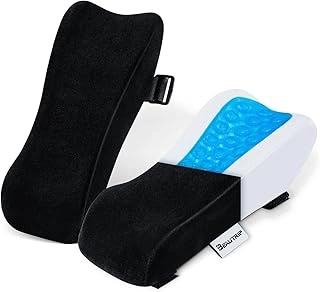
BEAUTRIP Office Chair Armrest Pads & Elbow Support Cushions - Set of 2
Thick memory foam makes the BEAUTRIP Office Chair Armrest Pads a practical choice when hard armrests create pressure on your elbows or forearms during long desk sessions. The set of two pads uses extra cushioning to distribute contact force across a wider surface area, which can reduce the concentrated pressure that plastic or thin-padded armrests put on bony prominences.
This approach trades thickness for comfort. Where thinner designs keep your elbow height closer to the original armrest surface, these pads add noticeable lift. If your current armrest height already puts your forearms parallel to the desk, the added thickness may raise your elbows above neutral, creating an upward slope at the shoulder. Most adjustable office chairs let you lower the armrests to compensate, but fixed-height chairs may require a desk riser or keyboard tray to restore alignment.
The memory foam compresses under your arm weight, adapting to forearm shape rather than forcing your elbow into a fixed contour. Over time, the foam will take a set where you rest most often, which maintains consistent support but may show visible indentations. At $23.08 for two pads, the cost is mid-range compared to gel or thin neoprene options, and the 4.3 rating reflects generally positive user experience with cushion performance and attachment stability.
If your chair has adjustable armrest height or you're willing to modify your desk setup, the extra cushion thickness delivers measurable pressure relief. If you need to preserve your current elbow-to-desk geometry, a thinner pad will introduce less vertical change while still softening the contact surface.
- ✅ Thick memory foam reduces concentrated pressure on elbow prominences
- ✅ Compresses and adapts to forearm shape
- ✅ $23.08 for set of two pads
- ⚠️ Added thickness raises elbow height and may require armrest or desk adjustment
- ⚠️ Foam will compress and show indentations over time
How to Install Armrest Pads Without Sliding or Bunching
Most armrest pads slip or bunch because the elastic straps are left too loose or the pad is placed off-center. Before attaching anything, clean the armrest surface with a damp cloth to remove dust or oil that can reduce friction. Position the pad so it covers the entire length of the armrest with equal overhang on both ends, then thread the elastic straps underneath and pull them tight enough that the fabric shows tension but does not warp the foam.
Press down firmly on the front, middle, and back of the pad after installation. If the pad shifts more than a quarter-inch under pressure, tighten the straps another notch or reposition the buckle closer to the fabric edge. Check that the seam or stitching line runs parallel to the armrest edge; a crooked alignment often causes uneven pressure and gradual sliding during arm movement.
Curved or extra-wide armrests require different strap placement. For curved surfaces, position the buckle on the underside where the curve is shaltest, usually near the center, so the elastic follows the contour without creating gaps. Wide armrests may need the straps crossed underneath in an X pattern to prevent side-to-side rotation. If your chair has adjustable armrest height or angle, install the pad in the position you use most often, then test the fit after making height changes to confirm the straps still hold.
Pads that continue to slide after proper installation usually indicate a mismatch between pad width and armrest size. A pad that is too narrow will rotate no matter how tight the straps are pulled, while an oversized pad will bunch at the edges and create pressure points. Measure your armrest width and compare it to the pad's flat dimensions before assuming the straps are the problem.
Memory Foam vs. Cooling Gel: Which Armrest Pad Material Lasts Longer?
Memory foam and gel-infused pads handle compression differently, and understanding their recovery patterns helps predict how long each material will support your forearms comfortably. Standard memory foam armrest pads maintain their original shape and firmness for 12 to 18 months under daily office use. The open-cell structure rebounds slowly after pressure, distributing weight evenly and resisting permanent indentation when the foam density is adequate. This predictable performance makes memory foam a reliable choice when durability matters more than temperature control.
Gel-infused foam pads offer immediate cooling contact, which reduces heat buildup during long sessions. The gel layer sits on top of or blends within a foam base, creating a surface that feels noticeably cooler at first touch. Over time, however, gel layers may separate from the foam substrate or harden as the gel compound ages. This separation reduces both the cooling effect and the pad's ability to recover its shape, often within the first year of regular use.
Compression recovery tells the real story. Memory foam springs back fully after each session, while gel pads tend to develop flat spots where elbows rest most often. If your chair sees eight or more hours of daily contact, standard foam will outlast gel in both structure and comfort. Choose gel-infused options when immediate temperature regulation is the priority and you plan to replace pads annually. For longevity and consistent support, memory foam delivers better value over the full product lifespan.
When Armrest Pads Won't Solve the Problem
Armrest pads reduce surface pressure and cushion hard materials, but they cannot correct poor armrest positioning. If your armrests sit too high, too low, too wide, or too narrow, adding foam or gel will leave the underlying alignment problem unchanged.
When armrests force your shoulders to lift toward your ears or push your elbows outward from your sides, the issue is geometry, not padding. Hunched shoulders and flared elbows create strain in the neck, upper trapezius, and rotator cuff muscles that no amount of cushioning can address.
A quick self-test reveals whether padding will help: sit with your back against the chair, relax your shoulders, and let your elbows hang naturally at your sides. Bend your elbows to 90 degrees. Your forearms should rest on the armrests without lifting your shoulders or spreading your elbows away from your torso. If the armrests miss this position by more than an inch in any direction, you need to adjust the chair hardware or choose a different chair with a wider adjustment range.
Fixed-height armrests on budget chairs are common culprits. If your chair offers no height, width, or depth controls, pads will only mask the discomfort temporarily. Over hours of sitting, misaligned armrests still pull your posture out of neutral and shift load onto muscles that fatigue quickly.
For guidance on adjusting or selecting chairs with proper armrest ergonomics, refer to resources that walk through measurement and fit checkpoints before purchasing accessories.
Simple Fixes That Extend Comfort Beyond Armrest Padding
Armrest pads reduce surface pressure, but sustained comfort depends on how you position your chair and move throughout the day. Start by adjusting armrest height so your forearms rest parallel to your desk surface, which keeps your shoulders relaxed and reduces the load on your elbows. If your armrests sit too high, your shoulders will hike upward; too low, and you'll lean or slump to make contact.
Keyboard and mouse placement matters just as much. Pull your keyboard close enough that your elbows stay near your torso rather than reaching forward, which shifts weight onto your forearms and increases pressure on the armrests. If you notice tingling or numbness in your hands after long sessions, check whether your wrists are bending upward or downward - neutral alignment starts with proper armrest and desk height.
Even the best padding cannot replace movement. Set a timer to lift your elbows off the armrests every 45 minutes, stand briefly, and roll your shoulders back. This habit prevents sustained compression on the ulnar nerve and gives soft tissue a chance to recover. Armrest pads handle the surface problem, but breaks and posture adjustments address the root causes of forearm fatigue and elbow discomfort.
The four pads covered in this guide deliver secure fit, effective cushioning, and straightforward installation for under $30. Each uses elastic straps or Velcro to stay in place on flat and curved armrests, and all four offer memory foam or gel layers thick enough to distribute pressure without bottoming out during a full workday. Choose based on armrest width, material preference, and whether you need cooling or contouring, then pair the pads with height adjustments and regular movement to keep your arms comfortable through long sessions.
What to Look for in Office Chair Armrest Pads
- Attachment method: elastic straps or slip-on covers that grip without adhesive residue
- Cushion material: memory foam for pressure relief, gel inserts for cooling
- Armrest width compatibility: measure your chair arms (most pads fit 2.5 - 4 inch widths)
- Cover fabric: breathable, machine-washable, and resistant to pilling
- Thickness: 0.75 - 1.5 inches for comfort without raising elbow angle excessively
- Set quantity: sold in pairs to cover both armrests