We may earn a commission when you buy through links on this page, at no extra cost to you. How this works.
Trideer Exercise Ball Chair with Base & Resistance Bands for Core Workout & Back Support
Ball chairs and wobble stools both promise core activation. We compare stability, comfort, and desk fit to show which matches your work style.
Remote work has shifted how we think about sitting. Long hours at a desk can leave the body stiff, the posture slouched, and the lower back aching by mid-afternoon. Many remote workers now look for seating that encourages subtle movement rather than locking the body in place.
Two options have gained traction: balance ball chairs and active sitting stools. A balance ball chair replaces a traditional seat cushion with an inflated exercise ball, sometimes adding a frame, wheels, or backrest. An active sitting stool - often called a wobble stool - uses a rounded or tilted base that rocks slightly as you shift your weight, keeping your legs and core engaged without the instability of a full sphere.
Both aim to turn sitting into a more dynamic activity, but they achieve it differently. Balance ball chairs emphasize constant micro-adjustments to stay centered on the ball. Active sitting stools offer a stable perch with controlled tilt, letting you engage your core without the risk of rolling away during a video call.
This comparison focuses on five practical dimensions: how much core engagement each design demands, comfort over a full workday, stability during focused tasks, adjustability for different desk heights and body types, and the physical footprint in a home office. We will not claim that either option prevents injury, cures back pain, or suits every body - active seating is a tool, not a medical device, and individual response varies widely.
If you spend most of your day at a keyboard, understanding the trade-offs between a balance ball chair and an active sitting stool will help you choose seating that supports movement without disrupting productivity.
Decision Checklist: Which Active Seating Fits Your Workflow?
- Choose a balance ball chair if you want maximum core engagement, have a fixed-height desk under 30 inches, and can dedicate space for its footprint during breaks
- Choose an active sitting stool if you need height adjustability for sit-stand desks, prioritize typing precision, or switch workstations frequently
- Consider your floor surface - ball chairs with wheels work best on hard floors; stools with wide bases handle carpet without sinking or rolling
- Factor in storage and mobility - stools tuck under desks more easily; ball chairs require more floor space and remain visible when not in use
- Test adaptation periods - ball chairs demand 1-2 weeks of short sessions to build tolerance; stools feel familiar faster and support full workdays immediately
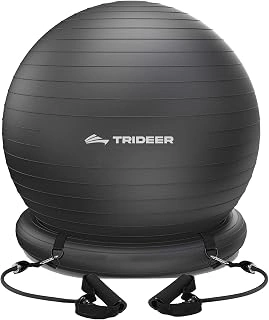
Trideer Exercise Ball Chair with Base & Resistance Bands for Core Workout & Back Support
The Trideer Exercise Ball Chair with Base & Resistance Bands offers an affordable entry into balance ball seating at $41.99. The included stability base keeps the ball from rolling away when you stand, and the resistance bands add a convenient option for quick stretches or upper-body exercises between tasks.
With a 4.3 out of 5 rating, users appreciate the value and dual-purpose design. The ball requires regular inflation checks to maintain firmness, and height adjustability is limited to swapping ball sizes rather than a mechanism. This makes it best suited for short focus sessions - multiple minutes - rather than all-day sitting, especially if your desk height falls outside the typical range for a the listed size or the listed size ball.
The base provides enough stability for typing and mousing without constant micro-corrections, though you'll still engage your core more than a traditional chair. If you're new to active seating or want a low-commitment way to test balance ball chairs, the Trideer delivers solid functionality without a steep upfront cost. Pair it with a conventional ergonomic chair for longer work blocks to avoid fatigue while still integrating movement into your routine.
- ✅ Budget-friendly at $41.99
- ✅ Stability base prevents rolling
- ✅ Resistance bands included for stretching and off-chair workouts
- ✅ Good entry-level option for testing active seating
- ⚠️ Requires periodic inflation maintenance
- ⚠️ Limited height adjustment - must swap ball sizes
- ⚠️ Best for short sessions rather than all-day use
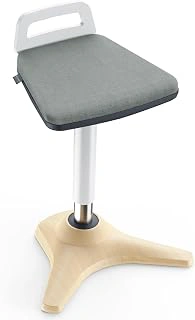
ERGO COLLECT Ergonomic Wobble Stool for Standing Desk, Height Adjustable with Non-Slip Base
The ERGO COLLECT Ergonomic Wobble Stool adjusts from sitting to standing desk height, making it practical for users who switch postures throughout the day or want one seat that travels with their workspace. Priced at $166.99 and rated 4.7 out of 5, this model targets remote workers who value stability and fine-tuned fit over the rolling, bouncing motion of a balance ball chair.
Height adjustability is the defining feature. Unlike fixed-height stools or ball chairs that rely on inflation to change seat level, the ERGO COLLECT uses a pole mechanism that locks at multiple positions. This range accommodates different desk heights and user preferences without sacrificing the controlled tilt that keeps your core lightly engaged. The non-slip base grips smooth flooring, so the stool stays anchored during small shifts in weight rather than sliding away when you lean.
The tilt mechanism is deliberately limited compared to aggressive wobble designs. You get gentle feedback when you shift forward or side to side, enough to discourage slouching but not so much that you spend energy stabilizing. This makes the stool easier to use during focused work, video calls, or detailed tasks where excessive motion would distract. The tradeoff is a smaller workout component - your core activates to maintain posture, but you won't feel the same constant engagement or calorie burn that a ball chair demands.
Comfort over long sessions depends on your tolerance for a firm, compact seat. The cushion is thinner than padded office chairs, and there's no backrest to lean into. Users who prefer structured support and controlled movement will appreciate the predictable feel, while those seeking softer cushioning or dramatic motion will find it too restrained. The higher price reflects the adjustable hardware and solid base construction, but it also means this stool costs more than entry-level wobble seats and most ball chairs.
This model fits best when you need one seat that adapts to sitting and standing desk configurations, want a stable base that won't roll or shift unexpectedly, and prefer subtle core engagement over constant balancing. If your priority is variety in posture and a fixed workspace footprint, the ERGO COLLECT delivers that without the inflation maintenance or floor-space bulk of a ball chair.
- ✅ Adjusts from sitting to standing desk height on one pole
- ✅ Non-slip base stays anchored on smooth floors
- ✅ Controlled tilt keeps core engaged without excessive motion
- ✅ 4.7/5 rating reflects solid build and adjustability
- ⚠️ $166.99 price is higher than most wobble stools and ball chairs
- ⚠️ Firm, compact seat with no backrest limits long-session comfort
- ⚠️ Limited tilt range offers smaller workout component than ball chairs
What Is a Balance Ball Chair?
A balance ball chair replaces the rigid seat of a traditional office chair with an inflated yoga ball, typically 52 to 65 centimeters in diameter, mounted on a wheeled or fixed base. Some models include a backrest, resistance bands for quick strength exercises, or locking casters to prevent rolling during phone calls. The ball's surface forces you to make constant small adjustments in posture, engaging your core muscles and hip stabilizers throughout the day.
The appeal is straightforward: you gain low-cost core activation without carving out dedicated workout time. Many balance ball chairs cost less than ergonomic task chairs, and you can deflate the ball for storage or use it separately for stretches and planks. That versatility makes them popular with remote workers in small apartments or shared spaces.
The tradeoff is stability. Because the ball compresses under your weight and shifts when you lean, typing accuracy and mouse control can suffer during deep-focus tasks. Height adjustment is limited to the amount of air you add or remove, so taller and shorter users often struggle to achieve the 90-degree knee and elbow angles that reduce wrist and shoulder strain. The constant micro-movement that activates your core can also feel distracting when you're drafting a long report or reviewing spreadsheets.
Balance ball chairs work best for people who sit in short bursts, move between tasks frequently, or want an inexpensive entry point to active seating. If you already enjoy yoga or Pilates and want to extend that movement vocabulary into your workday, the learning curve will feel familiar. Expect the first week to include wobbles and sore abdominal muscles as your body adapts to the instability.
What Is an Active Sitting Stool?
An active sitting stool features a rigid platform mounted on a spring-loaded or pivot base that allows controlled tilt in multiple directions while you sit. Unlike balance ball chairs, these stools maintain a solid, predictable surface that supports your full weight without the constant micro-adjustments required by an inflatable sphere. Most models include a height-adjustable pole that spans from traditional desk height to standing-desk height, making them adaptable to hybrid setups where you alternate between seated and elevated positions throughout the day.
The controlled tilt mechanism encourages small postural shifts - your core stays engaged to keep the platform centered, but the range of motion is significantly narrower than a ball chair. This design delivers a stable typing surface and reduces the learning curve for users new to active seating. You can focus on screen work without the wobble that sometimes interrupts concentration on a ball.
Active sitting stools typically carry a higher price than balance ball chairs, often ranging from twice to three times the cost depending on build quality and adjustability features. The trade-off is durability and precision: metal or reinforced plastic bases outlast inflatable PVC, and gas-lift cylinders provide repeatable height settings. However, the smaller range of movement means the workout component is minimal - you'll feel some core engagement, but it won't replicate the dynamic instability of a ball chair.
This option suits users who want adjustability and a more conventional seated feel. If you switch between sitting and standing modes, need a predictable platform for fast typing or mouse-intensive tasks, or prefer incremental ergonomic improvements over dramatic postural challenges, an active sitting stool delivers controlled engagement without sacrificing desk compatibility.
Head-to-Head: Core Engagement and Muscle Activation
Balance ball chairs and active sitting stools engage your core in different ways, and understanding that difference helps you match the right tool to your work style.
A balance ball chair requires continuous micro-adjustments in every direction. Your core, hip stabilizers, and lower back muscles work constantly to keep you centered on the sphere. This omni-directional instability recruits more muscle groups throughout the sit, which can feel invigorating at first but often leads to fatigue within an hour or two of focused work. The ball's surface gives no fixed point of reference, so your body never fully settles.
Active sitting stools, by contrast, offer controlled wobble along a narrower range of motion. The rocking or tilting platform keeps you mobile, but the movement is predictable and less demanding. Your core stays gently engaged to manage the sway, yet you can still anchor your attention on spreadsheets or calls without the cognitive load of constant balance correction. This subtler activation tends to sustain longer without the muscle fatigue that interrupts deep work.
The tradeoff is straightforward: ball chairs deliver higher muscle activation but shorter comfortable durations, while stools provide moderate, sustained engagement that fits better into multi-hour focus blocks. Neither replaces intentional exercise or guarantees fitness gains - they simply add movement variety to static sitting. If your workday includes frequent task-switching and natural breaks, a ball chair's intensity may suit you. If you need uninterrupted concentration for longer stretches, the stool's gentler engagement will likely serve you better without pulling focus from the screen.
Head-to-Head: Comfort and All-Day Use
Seated comfort over the course of a full workday depends on stability, surface feel, and how well each option lets you settle into focused tasks. Ball chairs sit you on a flexible, air-filled sphere that compresses under your weight and shifts with every movement. The soft surface can feel forgiving at first, but the constant micro-adjustments make it harder to hold a steady position during long video calls or detailed typing work. Some users report the bounce becomes a distraction rather than a benefit, pulling attention away from the screen.
Active sitting stools anchor you on a firmer platform - wood, molded plastic, or padded composite - that tilts but does not roll unpredictably. The predictable resistance lets you lean slightly forward or shift your hips without losing your place at the keyboard. When you need to stay still, the stool cooperates. That stability advantage makes stools easier to use for extended periods without feeling like you are fighting the furniture.
Both formats require an adaptation period. Ball chairs demand continuous small corrections in posture, and your core may fatigue within the first hour if you are new to active seating. Stools ask for similar engagement but spread the effort more evenly, so the learning curve feels less steep. Neither replaces the passive support of a traditional office chair entirely.
A realistic rotation strategy pairs either active seat with a conventional chair. Alternate between the two every sixty to ninety minutes, using the ball or stool during collaborative calls or lighter admin tasks and switching back to a standard chair for deep-focus sessions. This approach keeps engagement high without pushing comfort past its limit.
Head-to-Head: Stability, Safety, and Adjustability
Stability and safety separate these two active seating styles in ways that matter for long work sessions and quick transitions. Ball chairs typically sit on a wheeled base, which adds mobility around your desk but reduces lateral stability - particularly when you lean to one side or reach for something. The firmness of the ball itself changes with inflation level, so a slightly under-inflated ball offers more sink and contact area, while a fully inflated one feels firmer and less forgiving during sudden shifts in weight.
Active sitting stools counter that instability with a weighted base and a controlled pivot arc. The rocker mechanism or spring-loaded platform limits how far you can tilt, which lowers the risk of toppling if you lean too aggressively or twist to grab a phone. That predictable range of motion makes it easier to stay upright during video calls or when you need to stand up quickly for a break.
Adjustability plays a larger role than many buyers expect. Most ball chairs offer a fixed height determined by ball diameter - typically 55 cm or 65 cm - so compatibility depends on pairing the right size with your desk height. If your desk sits at 29 inches and you're tall, a 65 cm ball may leave your thighs angled downward, pushing pressure into your knees. Stools with pneumatic gas lifts let you dial in the exact seat height, and manual twist-lock posts on budget models still provide three or four height stops. That flexibility accommodates standing-desk converters, traditional desks, and users of different heights without swapping the entire unit.
Getting on and off a ball chair requires a small hop or controlled descent, which can feel awkward when you take frequent calls or switch between sitting and standing. A stool with a footring and stable base lets you step on, adjust your posture, and step off in one smooth motion. For remote workers who move every thirty minutes or toggle between tasks, that ease of transition reduces friction and keeps the active seating habit sustainable.
Head-to-Head: Desk Compatibility and Footprint
Physical compatibility matters when you bring active seating into a home office that wasn't built for it. Balance ball chairs occupy a wide footprint - most bases measure 22 to 26 inches in diameter - and can crowd a small desk alcove or bump into file cabinets tucked beside your chair. The wheeled bases glide well on hard floors but tend to dig into carpet pile, making repositioning a chore and leaving indentations over time. Clearance is another issue: if your desk apron sits lower than 26 inches, the inflated ball may not slide underneath, forcing you to park the chair farther back than you'd like.
Active sitting stools claim much less floor space. Their pedestal or rocker bases typically span 16 to 20 inches, leaving room for a rolling file cart or a dog bed without a game of office Tetris. Because the seat height adjusts lower and the profile is narrower, stools tuck under most standard desks when you step away. That compact footprint also makes stools a natural companion for height-adjustable standing desks - you can perch at the intermediate heights between sitting and standing without the ball chair's bulk getting in the way.
Cable routing becomes simpler with a stool. The open base leaves floor space for power strips and USB hubs, while a ball chair's wide stance can trap cables underneath or force you to route cords around the perimeter. On carpet, a stool's single contact point causes less compression than four or five caster wheels digging in with concentrated weight. If your home office doubles as a guest room or shared family space, the stool's smaller silhouette stores in a closet or slides beside a bookshelf without dominating the room when it's not in use.
The Verdict: Which Active Seating Option Is Right for You?
Balance ball chairs and active sitting stools each solve different problems, and your choice depends on whether you prioritize movement variety or predictable stability during focused work. Ball chairs offer more dynamic motion - forward, backward, and lateral shifts that keep your core muscles lightly engaged throughout the day. They typically cost less and take up minimal floor space, making them accessible if you want to experiment with active seating on a budget. The tradeoff is less height adjustment and a learning curve that can distract during video calls or detailed tasks.
Active sitting stools provide a stable base with height and tilt controls that make them easier to integrate into an existing desk setup. The tilting seat encourages upright posture without the constant micro-adjustments required by a ball, so you can stay focused on work rather than balance. They work well if you already have good monitor and keyboard positioning, because the stool complements that alignment rather than fighting it. The higher price and narrower range of motion are the main drawbacks.
Neither option replaces a well-adjusted monitor arm, a keyboard at elbow height, or regular movement breaks. Active seating keeps muscles lightly active, but it will not offset poor screen placement or hours of uninterrupted sitting. A hybrid approach works best for most remote workers: use your ball chair or stool for two- to four-hour blocks during tasks that do not require absolute stillness, then switch back to a supportive task chair when you need sustained concentration or attend back-to-back meetings.
Before you commit, measure your desk height and note whether you experience lower back fatigue, hip tightness, or shoulder discomfort during the workday. If your desk is not height-adjustable and sits below 28 inches, a ball chair may leave you reaching up uncomfortably; a stool with a wider adjustment range will be more forgiving. Trial one option for a week, paying attention to whether the active element helps you sit more upright or simply adds distraction. That real-world feedback will tell you more than any feature list.